












1. Indoor Cycling vs Spinning: The Main Differences
Although people often use the terms interchangeably, there are some practical distinctions.
| Feature | Indoor cycling | Spinning or spin-style cycling |
|---|---|---|
| Meaning | General term for stationary cycling | Commonly refers to studio-style cycling |
| Equipment | Upright, recumbent or indoor cycling bikes | Usually a dedicated studio-style indoor cycle |
| Riding position | Depends on the bike | Typically forward-leaning |
| Workout style | Steady cardio, intervals or endurance | Often structured intervals and resistance changes |
| Standing pedalling | Not supported on every bike | Common on suitable studio-style bikes |
| Suitable for beginners | Yes | Yes, with appropriate intensity |
| Typical setting | Home gyms, fitness centres and rehabilitation-oriented settings | Home workouts, cycling studios and commercial gyms |
The most important distinction is not necessarily the name of the workout. It's the type of bicycle and how you intend to use it.
2. What Is an Indoor Cycling Bike?
An indoor cycling bike is a stationary bicycle designed for cardiovascular exercise.
Different types of indoor bikes provide different riding experiences.
Upright Exercise Bikes
Upright exercise bikes generally offer a more vertical seated position.
They are popular for comfortable cardiovascular exercise, steady training sessions and general home fitness.
Many feature padded seats, electronic consoles and adjustable resistance.
Recumbent Exercise Bikes
Recumbent bikes feature a supported seat with a backrest and pedals positioned forward of the rider.
They may appeal to customers who prefer additional back support or a more relaxed seated position.
Studio-Style Indoor Cycles
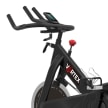
Studio-style bikes usually have a more forward-leaning riding position, a substantial flywheel or equivalent resistance mechanism, and adjustable saddles and handlebars.
They are commonly used for indoor cycling classes, interval workouts and performance-focused training.
For customers interested in spinning workouts, a studio-style indoor cycle is generally the most appropriate category to explore.
3. What Is Spinning?
Spinning is commonly associated with instructor-led indoor cycling sessions that use changes in pace and resistance to create a varied workout.
A typical spin-style session may include:
- A comfortable warm-up
- Steady seated cycling
- Higher-resistance efforts
- Faster pedalling intervals
- Optional standing riding on a suitable bike
- Recovery periods
- A gradual cool-down
The intensity can be adjusted for different fitness levels.
You don't need to attend a cycling studio to enjoy this style of training. A suitable indoor cycle allows you to follow structured workouts at home.
However, not every stationary exercise bike is designed for standing pedalling or demanding studio-style sessions. Always check the manufacturer's intended usage.
4. Spin Bike vs Exercise Bike: Which Should You Choose?
The best choice depends on how you prefer to exercise.
Choose a Studio-Style Spin Bike If You:
- Enjoy energetic, structured cycling sessions
- Want to alternate between steady riding and intervals
- Prefer a forward-leaning cycling position
- Want to follow online or instructor-led cycling workouts
- Need a bike suitable for regular, demanding cardio sessions
Choose an Upright Exercise Bike If You:
- Prefer a more upright seated position
- Primarily want steady cardiovascular exercise
- Value a conventional exercise-bike console
- Don't intend to pedal while standing
Choose a Recumbent Bike If You:
- Prefer a supported seated position
- Want a backrest during exercise
- Find the riding position more comfortable than a conventional upright bike
No single design is best for everyone. Comfort, adjustability and intended usage matter more than the terminology.
5. What Should You Look for When Buying a Spinning Bike?
Before purchasing, compare the following features.
Resistance System
Indoor cycling bikes commonly use magnetic or friction-based resistance.
Magnetic systems adjust resistance without relying on a friction pad pressing directly against the flywheel.
Friction systems use physical contact to create resistance.
Both can provide demanding workouts, but their adjustment feel and maintenance requirements differ.
Belt Drive vs Chain Drive
Belt-drive systems are often chosen for quieter operation and relatively low routine maintenance.
Chain-driven systems can provide a familiar mechanical cycling feel but may require more maintenance.
Saddle and Handlebar Adjustment
A suitable riding position is essential.
Look for adjustable saddle height and position, as well as handlebars that allow you to maintain a comfortable reach.
If several household members will use the bike, convenient adjustment is particularly valuable.
Flywheel and Riding Feel
Flywheel design influences the feel and momentum of a bike.
However, a heavier flywheel does not automatically make a bike better. Resistance technology, drivetrain design and overall construction also matter.
Stability and Maximum User Weight
Check the frame construction, maximum user weight and intended usage classification.
Commercial indoor cycles are designed for more frequent use by multiple riders.
Console and Connectivity
Some indoor cycles include a display, while others offer an optional console.
Depending on the model, displays may track time, speed, cadence, distance or other workout metrics.
Confirm the exact features before purchasing.
6. Indoor Cycling Bikes to Consider at Fitness Network
Fitness Network offers a range of indoor cycling bikes for home workouts and commercial environments.
Schwinn 800IC Indoor Cycle
The Schwinn 800IC is a studio-style indoor cycle worth considering for home riders seeking structured cycling workouts.
It is a relevant option for customers comparing dedicated indoor cycles rather than conventional upright exercise bikes.
Vision Fitness IC700 Commercial Indoor Cycle
The Vision Fitness IC700 is designed for commercial cycling environments.
Its features include:
- Magnetic resistance
- Poly-V belt drive
- Four-way adjustable saddle
- Four-way adjustable handlebars
- Dual-sided SPD-compatible and toe-cage pedals
- Heavy-duty commercial construction
- Optional wireless console
The IC700 is particularly relevant for cycling studios, commercial gyms and customers seeking a durable indoor cycle.
View the Vision Fitness IC700 Commercial Indoor Cycle
Which Indoor Cycle Is Right for You?
| Customer requirement | Equipment to consider |
|---|---|
| General home spin workouts | Schwinn 800IC |
| Commercial cycling studio | Vision Fitness IC700 |
| Comfortable seated cardio | Upright exercise bike |
| Seated cycling with back support | Recumbent exercise bike |
These are starting points rather than definitive recommendations. Compare the full specifications and intended usage before making a decision.
Shop Spinning Bikes and Indoor Cycles at Fitness Network
7. How to Set Up an Indoor Cycling Bike
Correct bike setup can make your workout more comfortable and controlled.
Adjust Your Saddle Height
Start with the saddle approximately level with your hips when standing beside the bike.
Once seated, check that your knee remains slightly bent at the bottom of the pedal stroke.
Avoid stretching excessively or rocking your hips to reach the pedals.
Check Saddle Position
Adjust the saddle forward or backward until you can pedal comfortably without feeling cramped or overextended.
Adjust the Handlebars
Position the handlebars so you can reach them without excessive strain on your back, shoulders or wrists.
Beginners may prefer a slightly higher handlebar position.
Check Stability
Place the bike on a firm, level surface.
Make sure the saddle and handlebar adjustments are securely locked before riding.
Follow the manufacturer's setup instructions for your specific model.
8. A Simple Indoor Cycling Workout for Beginners
If you're new to indoor cycling, start with a manageable workout rather than immediately attempting a demanding spin class.
| Stage | Duration | Activity |
|---|---|---|
| Warm-up | 3 minutes | Easy seated pedalling |
| Steady ride | 4 minutes | Comfortable, controlled pace |
| Interval | 1 minute | Slightly increase resistance or pace |
| Recovery | 2 minutes | Return to an easy effort |
| Steady ride | 3 minutes | Comfortable pedalling |
| Cool-down | 2 minutes | Gradually reduce effort |
Total: 15 minutes
This is an illustrative beginner routine. Shorten it if necessary, and increase your workload gradually as your fitness improves.
Standing intervals are optional and should only be attempted on a bike designed for them.
9. Is Spinning Better Than Regular Indoor Cycling?
Not necessarily.
A structured spin-style workout may appeal to people who enjoy energetic sessions and frequent changes in intensity.
A steady indoor cycling workout can be equally valuable for someone who prefers consistent, manageable cardiovascular exercise.
Both can contribute to cardiovascular fitness and overall physical activity.
The most effective approach is one that suits your fitness level, feels comfortable and can be maintained consistently.
Frequently Asked Questions
Is indoor cycling the same as spinning?
Spinning is commonly used to describe a studio-style indoor cycling workout. Indoor cycling is the broader term covering exercise on stationary bicycles, including upright, recumbent and studio-style bikes.
Is spinning suitable for beginners?
Yes. Beginners can start with short seated workouts, light resistance and a comfortable pace. Increase intensity gradually rather than attempting demanding intervals immediately.
Can you do a spinning workout on a regular exercise bike?
Many upright exercise bikes can be used for seated interval workouts. However, standing pedalling and other studio-style techniques may not be appropriate for every model. Follow the manufacturer's instructions.
Do you need special cycling shoes for spinning?
Not always. Some bikes have toe cages suitable for conventional training shoes, while others support cycling shoes with compatible cleats. Check the pedal design before purchasing footwear.
Is spinning better for weight loss than regular cycling?
Neither automatically produces better weight-loss results. Energy expenditure depends on factors such as intensity, duration and individual characteristics. Sustainable exercise habits and overall energy balance are more important than the workout label.
Can you stand while riding an indoor cycling bike?
Some studio-style indoor cycles are designed to support standing riding. Conventional upright and recumbent exercise bikes may not be. Only stand if the bike is designed for it and you can maintain control.
Is magnetic resistance better than friction resistance?
Magnetic resistance can offer smooth adjustment and reduced brake-pad maintenance. Friction resistance can also provide effective workouts. The better option depends on the bike's design, your preferences and expected usage.
What is the best spinning bike for home use?
The best spinning bike depends on your budget, available space, comfort requirements and preferred training style. Compare adjustability, resistance, stability, drivetrain and manufacturer specifications before choosing.
Find Your Ideal Indoor Cycling Bike at Fitness Network
Whether you call it indoor cycling or spinning, the goal is to choose a bike that supports your preferred workout and provides a comfortable, reliable riding experience.
For general seated cardio, an upright or recumbent exercise bike may be suitable.
For energetic studio-style workouts, a dedicated indoor cycle is worth considering.
At Fitness Network, we offer indoor cycling equipment for home users, fitness studios and commercial gyms across South Africa.