











What Is a Spinning Bike?
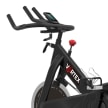
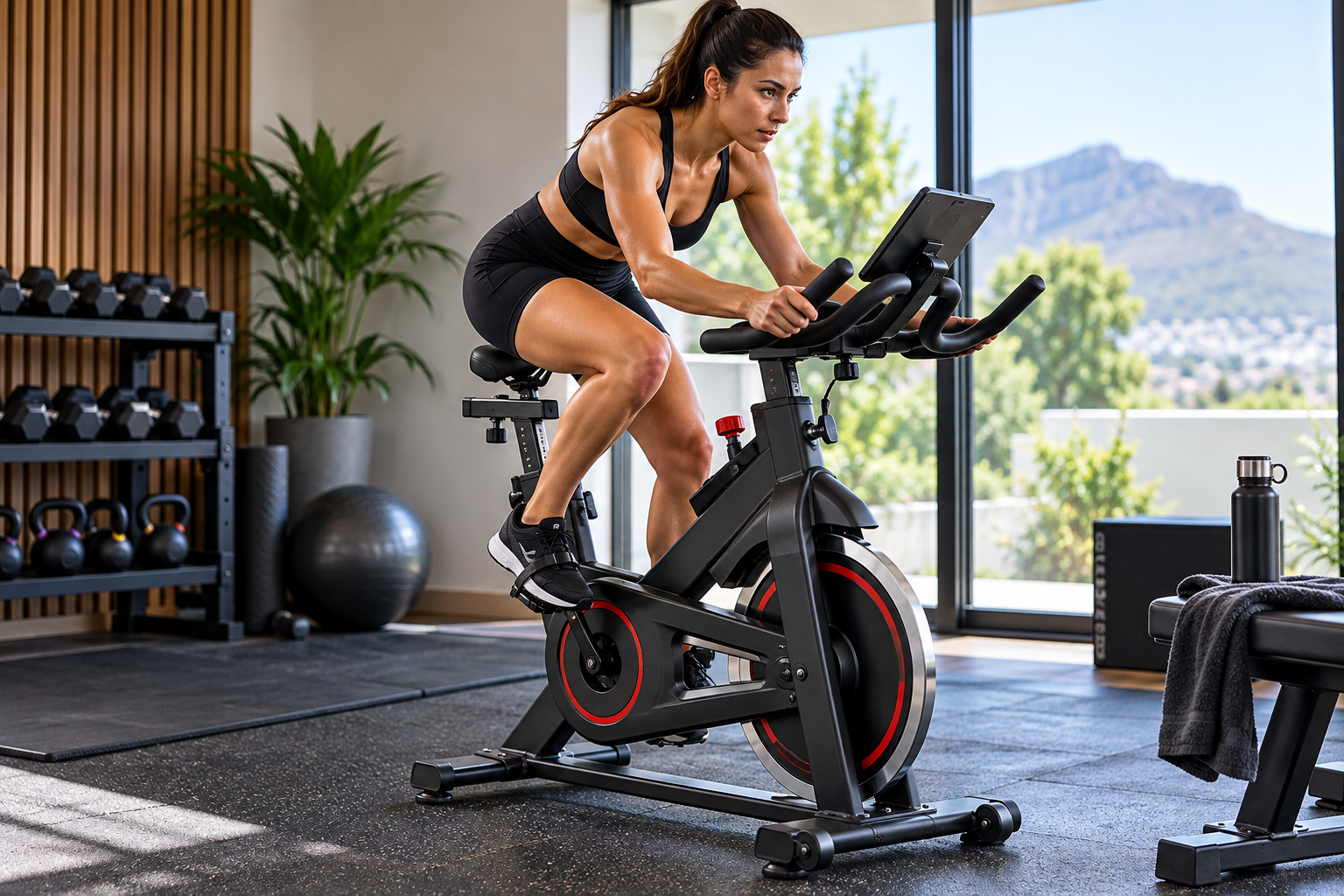
A spinning bike, also known as an indoor cycling bike or spin bike, is a stationary exercise bicycle designed to recreate aspects of outdoor cycling in a controlled indoor environment.
Unlike many traditional upright exercise bikes, spinning bikes generally feature a forward-leaning riding position, adjustable resistance and a design suited to both seated pedalling and standing efforts.
Depending on the model, spinning bikes can be used for:
- Cardiovascular fitness and endurance training
- High-intensity interval training (HIIT)
- Indoor cycling classes
- Low-impact aerobic exercise
- Structured training programmes
- General home fitness
One of the biggest advantages of indoor cycling is convenience. You can train regardless of weather conditions, traffic or daylight hours.
Spinning Bike vs Exercise Bike: What's the Difference?
Although both machines provide stationary cycling workouts, spinning bikes and conventional exercise bikes are designed around somewhat different riding experiences.
| Feature | Spinning Bike | Upright Exercise Bike |
|---|---|---|
| Riding position | Typically forward-leaning | Generally more upright |
| Standing pedalling | Commonly supported | Not always intended |
| Resistance | Often magnetic or friction-based | Often magnetic or electronically controlled |
| Workout style | Indoor cycling, intervals and endurance | General cardiovascular exercise |
| Console | Ranges from basic to advanced | Often includes programmed workouts |
| Ideal user | Riders wanting a cycling-focused workout | Users preferring more upright cardio exercise |
Neither is automatically better.
A spinning bike may be more suitable if you enjoy indoor cycling classes, standing climbs and varied resistance workouts.
An upright exercise bike may be preferable if you want a more upright riding position and straightforward cardiovascular exercise.
Compare Exercise Bikes at Fitness Network
1. Understand Spinning Bike Resistance Systems
The resistance system determines how much effort is required to turn the pedals.
Two common types are magnetic resistance and friction resistance.
Magnetic Resistance Spinning Bikes
Magnetic resistance systems use magnets positioned near the flywheel to create resistance without requiring a friction pad to press directly against it.
Depending on the model, resistance may be adjusted manually or electronically.
Advantages of magnetic resistance:
- No friction-pad contact with the flywheel
- Typically smooth resistance adjustment
- Reduced friction-pad wear
- Often well suited to home environments
- Available across entry-level and advanced indoor cycles
However, the overall noise level and riding feel also depend on the bike's drivetrain, construction and maintenance.
Friction Resistance Spinning Bikes
Friction resistance systems use a pad that presses against the flywheel to increase pedalling resistance.
Turning the resistance control adjusts the pressure applied to the flywheel.
Advantages of friction resistance:
- Straightforward mechanical operation
- Direct resistance adjustment
- Suitable for a wide range of cycling workouts
- Commonly found on traditional indoor cycling bikes
Friction systems may require periodic inspection or replacement of the resistance pad, depending on the design and usage.
Magnetic vs Friction Resistance Comparison
| Feature | Magnetic Resistance | Friction Resistance |
|---|---|---|
| Resistance mechanism | Magnets | Contact pad |
| Flywheel contact | No direct contact | Direct contact |
| Wear components | Generally fewer resistance-contact parts | Pad may wear over time |
| Adjustment | Manual or electronic, depending on model | Commonly manual |
| Noise | Often quiet, depending on the complete bike | Can produce friction noise |
| Maintenance | Depends on the drivetrain and model | Includes checking the resistance pad |
Our recommendation: For many home users, magnetic resistance is worth considering because it can provide smooth operation with limited resistance-system wear. However, overall bike quality, fit and stability remain more important than resistance type alone.
2. How Important Is Flywheel Weight?
The flywheel is a rotating component that contributes to the pedalling feel of an indoor cycling bike.
Spinning bikes may use different flywheel weights and drivetrain designs.
A heavier flywheel can contribute to rotational momentum and a smooth riding sensation, but flywheel weight alone does not determine the quality of a spinning bike.
Other factors include:
- Flywheel positioning
- Resistance system
- Drive mechanism
- Frame stability
- Pedal and crank construction
- Overall engineering
Some advanced indoor cycles achieve a responsive, smooth ride without relying on an exceptionally heavy flywheel.
When comparing models, assess the complete riding experience rather than choosing solely on the advertised flywheel weight.
3. Choose a Spinning Bike with Proper Adjustability
Correct bike fit is one of the most important factors in comfortable indoor cycling.
An incorrectly adjusted bike may place unnecessary strain on the knees, hips, shoulders or lower back.
Adjustable Saddle Height
The saddle should adjust to accommodate your leg length.
As a general starting point, your knee should remain slightly bent at the bottom of the pedal stroke.
Avoid setting the saddle so high that your hips rock from side to side.
Forward and Backward Saddle Adjustment
Horizontal saddle adjustment helps position your body comfortably relative to the pedals.
This can be especially useful when several family members share the same spinning bike.
Adjustable Handlebars
Handlebar height adjustment allows riders to find a comfortable upper-body position.
Some models also offer horizontal handlebar adjustment for additional flexibility.
Multi-User Households
If several people will use the bike, prioritise a model with a generous adjustment range and secure, easy-to-operate adjustment mechanisms.
Buying tip: Always check the manufacturer's recommended user-height range and adjustment specifications where available.
4. Belt Drive vs Chain Drive
Spinning bikes commonly use a belt or chain to transfer pedalling movement to the flywheel.
Belt-Drive Spinning Bikes
Belt-drive systems are popular for home indoor cycling because they can provide smooth operation with relatively low drivetrain noise.
They generally require less routine lubrication than chain-driven systems.
Chain-Drive Spinning Bikes
Chain-drive systems use a chain mechanism similar in principle to that found on many outdoor bicycles.
They can provide a familiar mechanical riding sensation but may require periodic lubrication, adjustment and inspection.
Which Is Better?
For home use, a well-designed belt-drive spinning bike is often a practical choice, particularly where noise and maintenance are important considerations.
However, construction quality and correct maintenance are more important than the drive system alone.
5. Spinning Bike Consoles and Training Technology
Not every spinning bike includes the same console or connectivity features.
Some models offer basic workout information, while others provide advanced performance metrics and interactive training capabilities.
Common display features may include:
- Workout time
- Speed
- Distance
- Cadence or RPM
- Estimated calories
- Heart rate, where supported
- Power output, where supported
Do You Need a Smart Spinning Bike?
A smart or connected indoor cycle may appeal to riders who want structured training, performance tracking or compatible third-party training applications.
However, not every bike supports the same apps or connectivity standards.
Before purchasing, confirm whether the bike offers Bluetooth, ANT+, power measurement or app connectivity if those features are important to you.
For general fitness and indoor cycling classes, a straightforward bike with reliable resistance and comfortable adjustments may be all you need.
6. Check Stability, Maximum User Weight and Dimensions
A spinning bike should feel stable during both seated cycling and standing efforts.
When comparing models, consider:
Frame construction: A rigid, well-designed frame helps support consistent pedalling.
Maximum user weight: Always confirm the manufacturer's specified user limit.
Levelling feet: Adjustable feet can help stabilise the bike on a slightly uneven floor.
Transport wheels: Useful for repositioning the bike, although they do not necessarily make it easy to store.
Assembled dimensions: Measure your available floor space before ordering.
Leave enough room to mount and dismount safely, adjust the bike and move comfortably during training.
If the bike will be used in a shared living area, consider noise, ventilation and access around the equipment.
7. Choosing the Best Spinning Bike for Your Training Goals
Different riders have different requirements.
A beginner using a bike for occasional home workouts may not need the same features as an experienced cyclist following structured performance sessions.
| Training requirement | What to prioritise |
|---|---|
| Beginner home cycling | Comfortable fit, stability and simple resistance controls |
| Regular home workouts | Durable construction, smooth resistance and adjustability |
| HIIT and interval training | Stable frame and easy resistance changes |
| Performance cycling | Relevant metrics, connectivity and precise training controls |
| Shared family use | Wide adjustment range and easy setup |
| Commercial gym or studio | Appropriate commercial-use rating, durability and support |
Consider how frequently the bike will be used, who will use it and whether you intend to follow instructor-led classes or independent workouts.
8. Spinning Bikes Available at Fitness Network
Fitness Network offers indoor cycling options across different budgets and training requirements.
The following models are useful starting points when comparing equipment.
Vanguard Spin X1.4 Magnetic Home Spin Bike
The Vanguard Spin X1.4 is positioned within Fitness Network's home indoor cycling range.
It is worth considering for customers who want a magnetic-resistance spinning bike for regular home workouts.
Compare its adjustment range, dimensions and console specifications against your individual requirements.
Vanguard Spin X1.6 Magnetic Spin Bike
The Vanguard Spin X1.6 is positioned for home and light commercial use.
It is an option to compare if you anticipate more frequent indoor cycling sessions or shared use.
Check the model's current technical specifications and intended-use rating before selecting it.
Schwinn 800IC Indoor Cycle
The Schwinn 800IC is another indoor cycling option available through Fitness Network.
It may appeal to customers comparing established indoor cycling brands and looking for a dedicated cycling-focused machine.
Review the console, connectivity and adjustment specifications to establish whether they suit your preferred training style.
Vision Fitness IC700 Commercial Indoor Cycle
The Vision Fitness IC700 is positioned as a commercial indoor cycling option.
It is worth considering for commercial fitness facilities and buyers who want equipment designed for more demanding usage environments.
Confirm the exact console configuration and commercial warranty conditions when comparing models.
Vanguard Spin XC2.4 Commercial Spin Bike
The Vanguard Spin XC2.4 is another commercial spinning bike option in the Fitness Network range.
Its product listing identifies a 28kg flywheel. However, the flywheel specification should be assessed alongside the bike's resistance system, frame construction and overall ride quality.
Which Model Should You Choose?
For general home use, start by comparing the Vanguard Spin X1.4 and X1.6.
For riders considering alternative brands and indoor cycling features, include the Schwinn 800IC.
For commercial applications, compare the Vision IC700 and Vanguard Spin XC2.4 according to the expected usage, warranty and equipment specifications.
Browse the Complete Spinning Bike Range
9. Should You Buy a New or Secondhand Spinning Bike?
A secondhand spinning bike may offer a lower initial purchase price, but condition and maintenance history are important.
Before buying a used bike, check:
- Whether the resistance mechanism operates correctly
- Whether the pedals and crank arms move smoothly
- Whether the frame is stable
- Whether the seat and handlebar adjustments lock securely
- Whether there are unusual noises during pedalling
- Whether the drivetrain shows excessive wear
- Whether replacement parts are available
- Whether the bike has been maintained appropriately
Buying new may offer advantages such as manufacturer warranty coverage, current product documentation and access to supplier support.
At Fitness Network, customers can compare new indoor cycling equipment and obtain advice on choosing a suitable model.
10. Spinning Bike Buying Checklist
Before purchasing, ask yourself the following questions:
- Does the bike fit my height and preferred riding position?
- Is the resistance system suitable for my workouts?
- Does the flywheel and drivetrain provide the riding experience I want?
- Can the saddle and handlebars be adjusted sufficiently?
- Does the bike provide the console information I need?
- Is the frame stable during standing efforts?
- What is the maximum supported user weight?
- Will the assembled bike fit comfortably in my home?
- What warranty and after-sales support are available?
- Is the bike intended for home, light commercial or full commercial use?
Answering these questions will help you narrow down the available options and avoid paying for features you are unlikely to use.
Frequently Asked Questions About Spinning Bikes
What is the difference between a spinning bike and an exercise bike?
A spinning bike is generally designed around a cycling-focused riding position that accommodates seated pedalling, standing climbs and interval workouts.
Traditional upright exercise bikes usually provide a more upright riding position and may offer additional preset workout programmes.
Both are suitable for cardiovascular exercise. The best choice depends on comfort, training preferences and the riding experience you want.
Are spinning bikes good for weight loss?
Spinning bikes can support weight management by providing a convenient form of cardiovascular exercise that increases energy expenditure.
Regular indoor cycling, combined with appropriate nutrition and a consistent training programme, may contribute to fat loss.
Results depend on workout frequency, intensity, duration and overall lifestyle. No exercise machine can guarantee weight loss on its own.
Is a spinning bike suitable for beginners?
Yes. Spinning bikes can be suitable for beginners because resistance and workout intensity can be adjusted to match individual fitness levels.
Start with shorter sessions at a comfortable pace and gradually increase duration or resistance as your conditioning improves.
Correct bike setup is important, especially saddle height and handlebar position.
Is magnetic resistance better than friction resistance?
Magnetic resistance can offer smooth adjustment without direct contact between a friction pad and the flywheel, making it attractive for many home users.
Friction resistance is a straightforward mechanical alternative that can also provide effective workouts.
The best choice depends on the complete bike design, riding feel, maintenance requirements and budget.
Does a heavier flywheel make a spinning bike better?
Not necessarily.
A heavier flywheel can contribute to rotational momentum, but it does not automatically produce a better riding experience.
Resistance design, drivetrain quality, frame stability and overall engineering are also important.
Compare the complete bike rather than choosing based on flywheel weight alone.
How long should beginners use a spinning bike?
Beginners may start with approximately 10–20 minutes of comfortable cycling, depending on their fitness level and tolerance.
As endurance improves, workout duration and intensity can gradually increase.
A sustainable training routine is generally more useful than attempting demanding sessions before developing the necessary conditioning.
Can you stand while pedalling on a spinning bike?
Many spinning bikes are designed to accommodate standing cycling efforts.
However, you should confirm that the specific model supports this riding style and is correctly adjusted.
Maintain control, use appropriate resistance and avoid unstable or excessively aggressive movements.
Are spinning bikes noisy?
Noise levels vary according to the resistance system, drivetrain, construction, floor surface and maintenance condition.
Magnetic-resistance and belt-drive bikes are often considered for home use where quieter operation is desirable.
However, no resistance or drive system guarantees silent operation.
Do spinning bikes require electricity?
Some spinning bikes operate mechanically without needing a mains power connection.
Others may require batteries or external power for consoles, electronic resistance systems or connected features.
Check the specifications of the model you are considering.
Can I use a spinning bike every day?
Indoor cycling can form part of a regular exercise routine, but the appropriate frequency depends on workout intensity, experience and recovery.
Alternating easier rides with more demanding sessions may help manage fatigue.
If you are new to cycling, build training frequency gradually rather than beginning with intense daily workouts.
What maintenance does a spinning bike need?
Maintenance depends on the bike's construction and drive system.
Common tasks include checking pedals and fasteners, cleaning sweat from contact surfaces, inspecting the drivetrain and confirming that adjustment mechanisms operate securely.
Friction-resistance systems may require periodic inspection of the resistance pad.
Always follow the manufacturer's maintenance instructions.
Is a commercial spinning bike worth buying for home use?
A commercial spinning bike may be worth considering if you expect frequent use, want a particular riding experience or need equipment suited to multiple users.
However, a commercial model is not automatically necessary for home training.
A well-matched home spinning bike can provide an excellent workout without the additional expense of commercial equipment.
Where can I buy spinning bikes in South Africa?
Fitness Network supplies spinning bikes and indoor cycles for home and commercial applications, including models from Vanguard Fitness, Schwinn, Vision Fitness and other brands.
Customers can compare different resistance systems, specifications and training applications before selecting a suitable model.
Shop Spinning Bikes for Sale in South Africa
Find the Right Spinning Bike at Fitness Network
Choosing the right spinning bike comes down to matching the equipment to your fitness goals, available space and budget.
Prioritise a comfortable riding position, reliable resistance, appropriate adjustment options and stable construction.
Whether you're buying your first indoor cycle or selecting equipment for a commercial training facility, comparing the right specifications will help you make a more confident decision.
At Fitness Network, we offer spinning bikes for different training requirements, from accessible home cycling options to performance and commercial indoor cycles.
Explore the range, compare models and choose the indoor cycling equipment that best suits your needs.