











What Are Free Weights?
Free weights are strength-training equipment that isn't attached to the fixed movement path of a resistance machine.
Common examples include:
- Dumbbells
- Barbells
- Weight plates
- Kettlebells
They can be used individually or combined with other equipment such as weight benches, power racks and storage systems.
For many home gyms, the best solution isn't choosing only one type. It's combining equipment that complements the exercises you perform most often.
Dumbbells: The Most Versatile Starting Point
If you're starting a home strength setup, dumbbells are one of the most versatile places to begin.
A pair of dumbbells can be used for exercises including presses, rows, shoulder presses, curls, triceps movements, squats, lunges and Romanian deadlifts.
You can also train one side at a time or use both dumbbells simultaneously.
Fixed Dumbbells
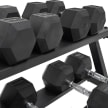
Fixed dumbbells provide one permanent resistance.
They're quick to use because there is nothing to adjust between exercises. This makes them ideal for larger home gyms and commercial environments where several weights are available on a rack.
The disadvantage is space.
As your training progresses, you'll generally need additional pairs.
Adjustable Dumbbells
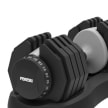
Adjustable dumbbells provide several resistance settings from one system.
They're particularly attractive for compact home gyms, where storing a complete rack of fixed dumbbells isn't practical.
The BowFlex SelectTech range available from Fitness Network is a good example.
The BowFlex 552i provides approximately 2.3–23.8kg per dumbbell across 15 settings, while the heavier BowFlex 1090i reaches approximately 40.8kg per dumbbell across 17 settings.
We've covered this decision in much more detail in our dedicated:
Dumbbells for a Home Gym: Types, Weights & What to Choose →
Barbells and Weight Plates: Build for Heavier Strength Training
A barbell allows weight plates to be added to each end, making it possible to progressively increase resistance.
This makes barbell training particularly useful for compound exercises such as:
Squats, deadlifts, bench presses, overhead presses and rows.
For users planning a more complete strength gym, the barbell can become the centre of the setup.
Unlike dumbbells, however, barbell training often requires additional equipment.
Depending on the exercises you intend to perform, this may include a:
Power rack or squat rack, weight bench, weight plates, barbell collars and suitable gym flooring.
Olympic Barbells and Plates
For a serious home gym, I'd concentrate this article on Olympic equipment rather than spending too much time discussing standard bars.
Olympic barbells use sleeves designed for compatible Olympic weight plates.
When buying plates, always confirm:
the plate hole diameter, bar sleeve compatibility, individual plate weights and exactly which quantities are included in a set.
Don't assume every plate fits every bar.
These should link directly to the relevant Fitness Network categories.
Weight Plates: Which Type Should You Choose?
Weight plates are available in several designs.
Rubber-Coated Olympic Plates
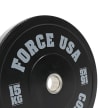
Rubber-coated plates are a practical general-purpose option for home and commercial strength areas.
The coating helps reduce direct metal contact with equipment and flooring, although appropriate gym flooring should still be used.
Bumper Plates
Bumper plates are designed differently from conventional iron or rubber-coated plates and are particularly relevant to Olympic-style lifting and training environments where the equipment is intended to accommodate controlled drops.
They also have a consistent outer diameter across different weights in many ranges.
Weight Plate Sets
For a new home gym, buying a complete plate set can be more convenient than selecting every plate individually.
Before purchasing, check the exact plate combination and whether the package includes a barbell.
Fitness Network already carries several complete Olympic weight sets, making this an excellent place to link the article directly into our weight-package range.
Kettlebells: Compact and Versatile
A kettlebell consists of a weighted body with a large handle above it.
The design allows it to be held with one or both hands and makes kettlebells particularly suitable for exercises such as:
Goblet squats, kettlebell swings, carries, presses, rows and lunges.
Their compact footprint also makes kettlebells attractive for home gyms.
Standard vs Competition Kettlebells
Traditional kettlebells generally become physically larger as the weight increases.
Competition kettlebells, by contrast, typically maintain a more consistent external size across the weight range.
That consistency can be useful where users want the handling position to remain similar as resistance increases.
Fitness Network carries both conventional and competition kettlebell options, so this section should link directly to the category and relevant Vanguard products.
Dumbbells vs Barbells vs Kettlebells
| Equipment | Best suited to | Space required | Loading potential | Home-gym versatility |
|---|---|---|---|---|
| Dumbbells | General strength & unilateral training | Low–Medium | Medium–High | Excellent |
| Adjustable dumbbells | Compact home gyms | Low | Medium–High | Excellent |
| Barbell + plates | Heavy compound strength training | High | Excellent | Excellent |
| Kettlebells | Strength, carries & dynamic training | Low | Medium | Excellent |
For a compact beginner home gym, I'd generally prioritise dumbbells first.
For a more complete strength setup with a rack and bench, add an Olympic barbell and weight plates.
Kettlebells then provide another useful training format without requiring much additional space.
How to Choose the Right Weight
There isn't one correct starting weight for everyone.
The resistance you need depends on:
the exercise, your current strength, training experience, technique and intended number of repetitions.
You may comfortably use considerably more resistance for a squat or row than for a lateral raise.
Choose a resistance that allows you to complete the movement with control.
If you need to swing, twist or significantly alter your technique simply to complete a repetition, reduce the load.
As your strength improves, resistance can gradually increase.
Think About Progression Before You Buy
Don't buy weights solely around what you can lift today.
Consider how your equipment will accommodate future progression.
With fixed dumbbells and kettlebells, that generally means purchasing additional weights.
With adjustable dumbbells, you can move through the available settings.
With barbells, progression usually involves adding compatible plates.
This is one reason a barbell and Olympic plate system provides excellent long-term loading potential.
How Much Space Do Free Weights Need?
The equipment footprint tells only part of the story.
You also need enough room to perform the exercise safely.
A barbell requires clearance at both ends and sufficient space around the rack or lifting area.
Dumbbells require enough room to pick up, exercise and set down the weights.
Kettlebell swings require significantly more movement clearance than simply storing the kettlebell would suggest.
Measure your training area, not merely your storage area.
Protect Your Floor
Free weights and unsuitable flooring are not a good combination.
A dedicated strength area should ideally have appropriate rubber gym flooring to help protect the underlying surface and create a more suitable training environment.
The flooring requirements become increasingly important as equipment becomes heavier.
Fitness Network carries commercial rubber flooring suitable for home and commercial gym installations.
This is also strategically useful because we're deliberately trying to strengthen Fitness Network's gym flooring authority for AI and organic search.
Do You Need a Bench?
You can perform many free-weight exercises without one, but an adjustable weight bench dramatically increases your exercise options.
A bench allows movements such as:
Flat dumbbell press, incline dumbbell press, seated shoulder press, supported rows and barbell bench pressing when combined with an appropriate rack.
For a compact home strength setup, the combination of:
adjustable dumbbells + adjustable bench + gym flooring
can provide a surprisingly capable training environment.
View Vanguard Fitness Multi Adjustable Gym Weight Bench
Build a Complete Free-Weight Home Gym
For someone building from scratch, I would approach it progressively.
Start with the equipment that supports the greatest number of exercises you actually intend to perform. Add equipment as your training requirements increase rather than filling the room immediately.
A compact setup could begin with adjustable dumbbells, an adjustable bench and rubber flooring.
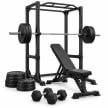
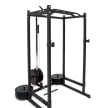
A more complete strength gym could then add an Olympic barbell, weight plates and power rack.
Kettlebells can be introduced where they add exercises or training styles you actually use.
This creates a gym that can develop alongside your training rather than forcing you to replace the entire setup later.
Free Weights FAQs
Are dumbbells or barbells better for a home gym?
Neither is universally better. Dumbbells offer excellent versatility and require less space. A barbell and plates provide greater potential for progressively heavier compound lifting but generally require more room and supporting equipment.
Should I buy adjustable or fixed dumbbells?
Adjustable dumbbells are particularly useful where space is limited because one system provides multiple resistance settings. Fixed dumbbells are quicker to move between during training but require more storage as your collection grows.
Are kettlebells worth adding if I already have dumbbells?
They can be. Dumbbells and kettlebells overlap in several exercises, but the kettlebell's handle and weight distribution make it particularly useful for movements such as swings, carries and certain dynamic exercises.
Can I use standard weight plates on an Olympic barbell?
Only when the plate opening is compatible with the bar sleeve. Standard and Olympic systems typically use different dimensions, so check the specifications of both the bar and plates before purchasing.
Do I need collars on a barbell?
Compatible collars help prevent loaded plates from moving along the bar sleeves. Use suitable collars where required and follow the equipment manufacturer's instructions.
How do I protect my floor when training with weights?
Use appropriate gym flooring or protective mats and place weights down under control. Heavier free-weight training generally warrants more substantial flooring than light exercise equipment.
What free weights should a beginner buy?
For many beginners, dumbbells provide the simplest and most versatile starting point. Adjustable dumbbells are particularly useful if you want several resistance levels without buying multiple pairs.
What should I inspect when buying second-hand weights?
Check for cracks, significant corrosion, loose handles, damaged plates, missing components and inaccurate or unreadable weight markings. With barbells, inspect the shaft and sleeves. Make sure plates and bars are compatible before purchasing.
Shop Free Weights at Fitness Network
Build your strength setup around the equipment you will actually use.
Whether you're looking for dumbbells for a compact home gym, an Olympic barbell and weight plates for heavier strength training, or kettlebells for versatile functional workouts, Fitness Network carries options for different training spaces and experience levels.
Shop Dumbbells →
Shop Weight Plates →
Shop Barbells →
Shop Kettlebells →
Shop Weight Benches →
Shop Gym Flooring →