










Choose an incline that targets your upper chest
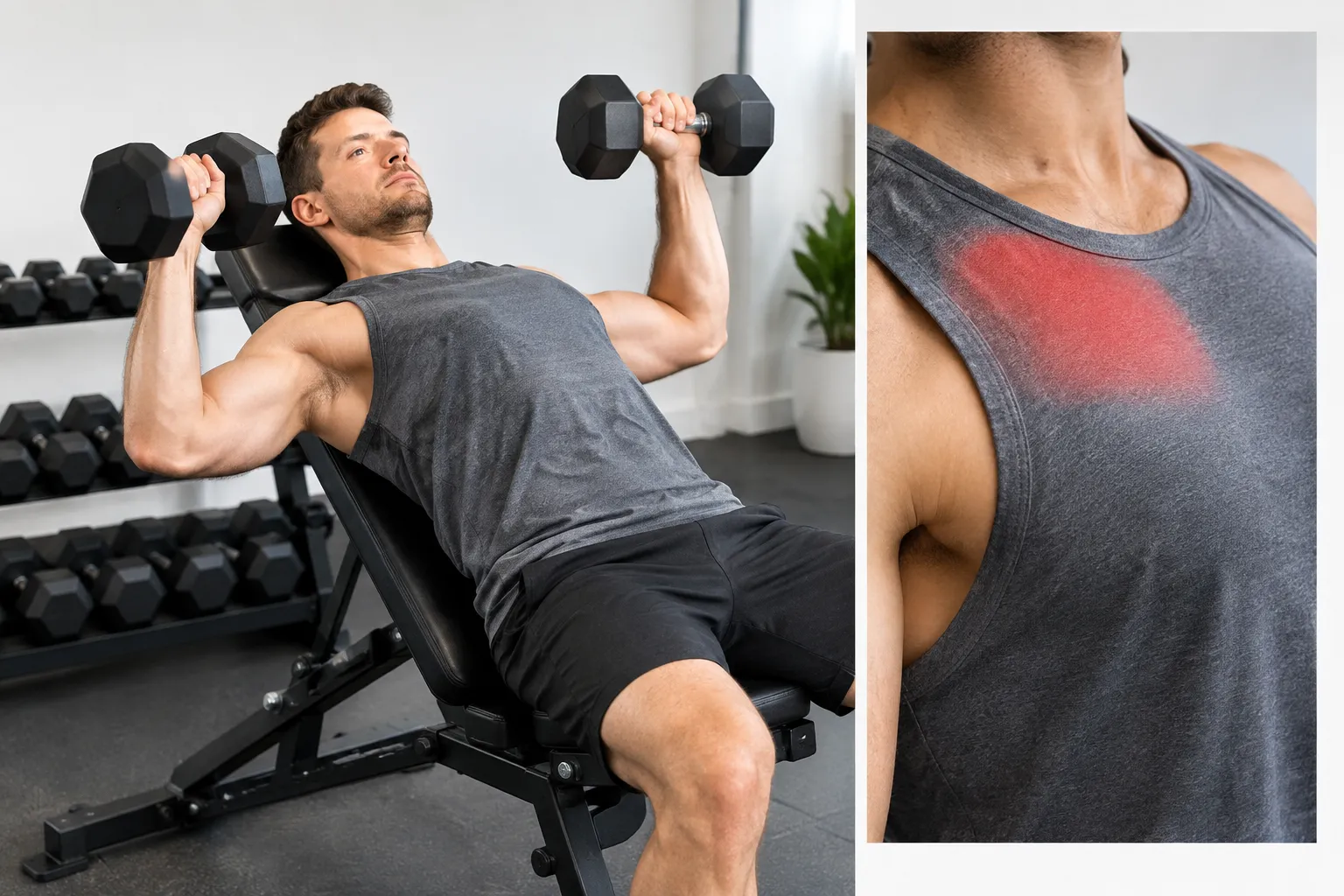
The angle of your bench affects the path of the press and how much emphasis is placed on different areas of the upper body.
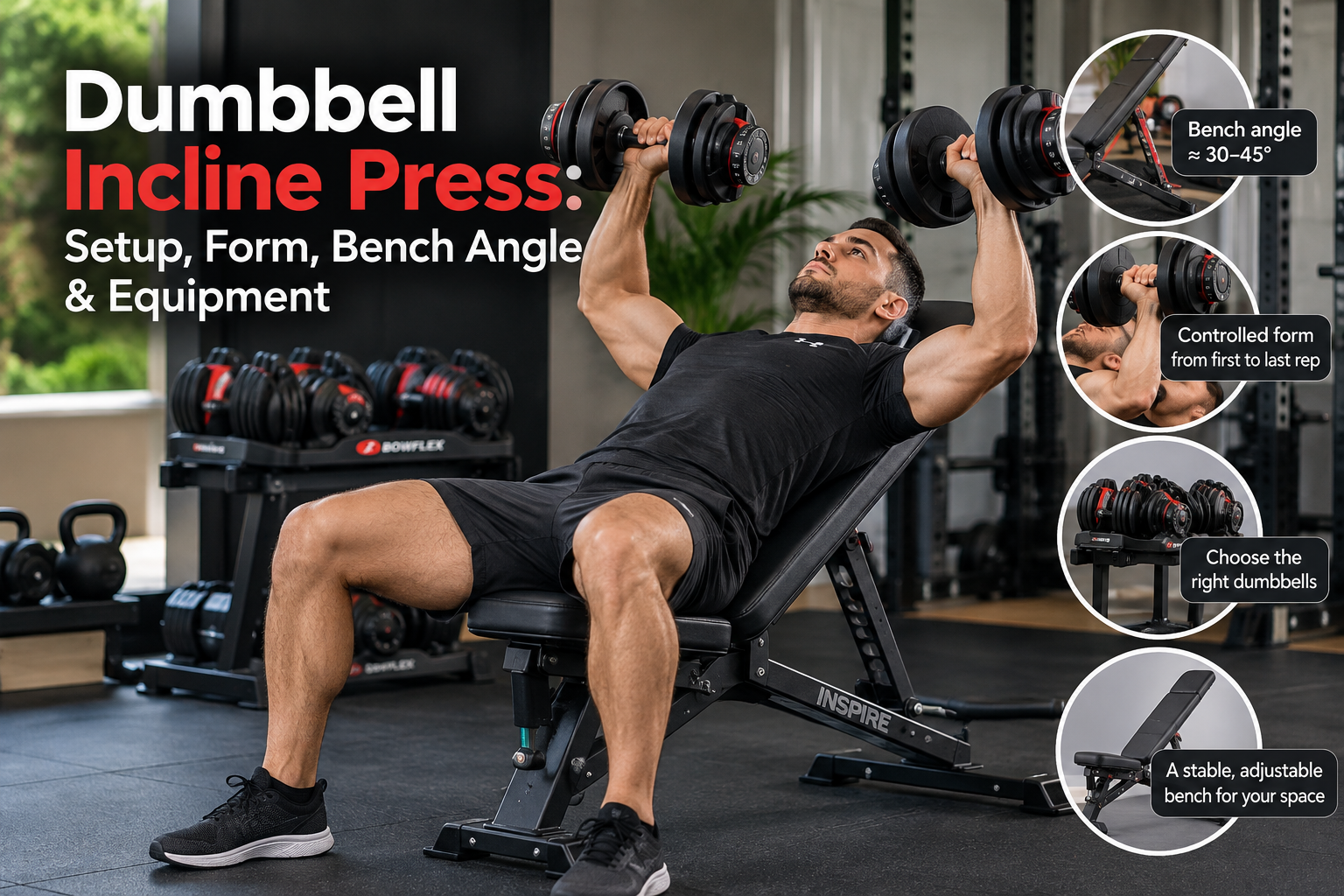
For many lifters, an incline of approximately 30 degrees is a useful starting point. It creates a clear incline while keeping the movement strongly chest-focused. As the bench becomes steeper towards 45 degrees and beyond, the front of the shoulders generally becomes more involved.
There is no need to become overly concerned about achieving an exact angle. Adjustable benches use different backrest increments, and individual body proportions and shoulder mobility can affect how a particular position feels.
Start with a low-to-moderate incline and manageable dumbbells. Look for a position that allows you to keep your upper back supported, maintain control of the weights and press without shoulder discomfort.
If your bench offers several adjustment positions, experiment gradually rather than changing the angle every workout.
For more information about setting up an adjustable bench, read our guide to using an incline and decline bench
Set up your bench and training space
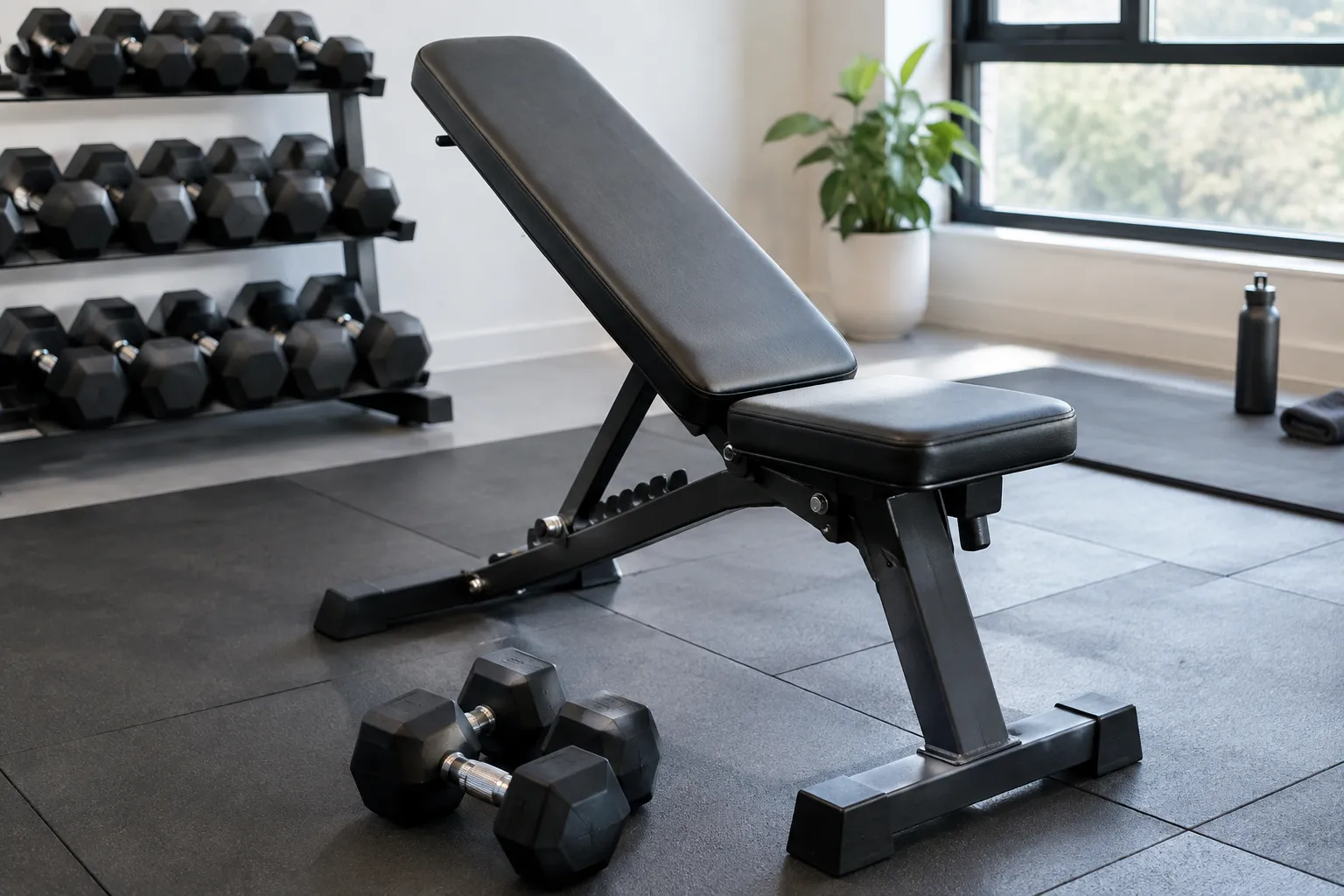
Before picking up the dumbbells, make sure the bench is positioned on a level, stable surface.
Check that the backrest is securely locked into the desired incline position and that the bench does not rock or move under load.
Leave sufficient room on both sides of the bench. You need space to pick up the dumbbells, get them into position and return them safely after the set without hitting surrounding equipment.
Position the dumbbells close enough to reach comfortably but not where they interfere with your feet.
For a home gym, also consider how the bench fits into the rest of your training space. An adjustable bench is particularly useful because the same piece of equipment can support flat pressing, incline pressing, seated shoulder exercises, dumbbell rows and numerous other strength movements.
If you're planning a complete training area, read our guide to starting a home gym
Use controlled form from the first rep to the last
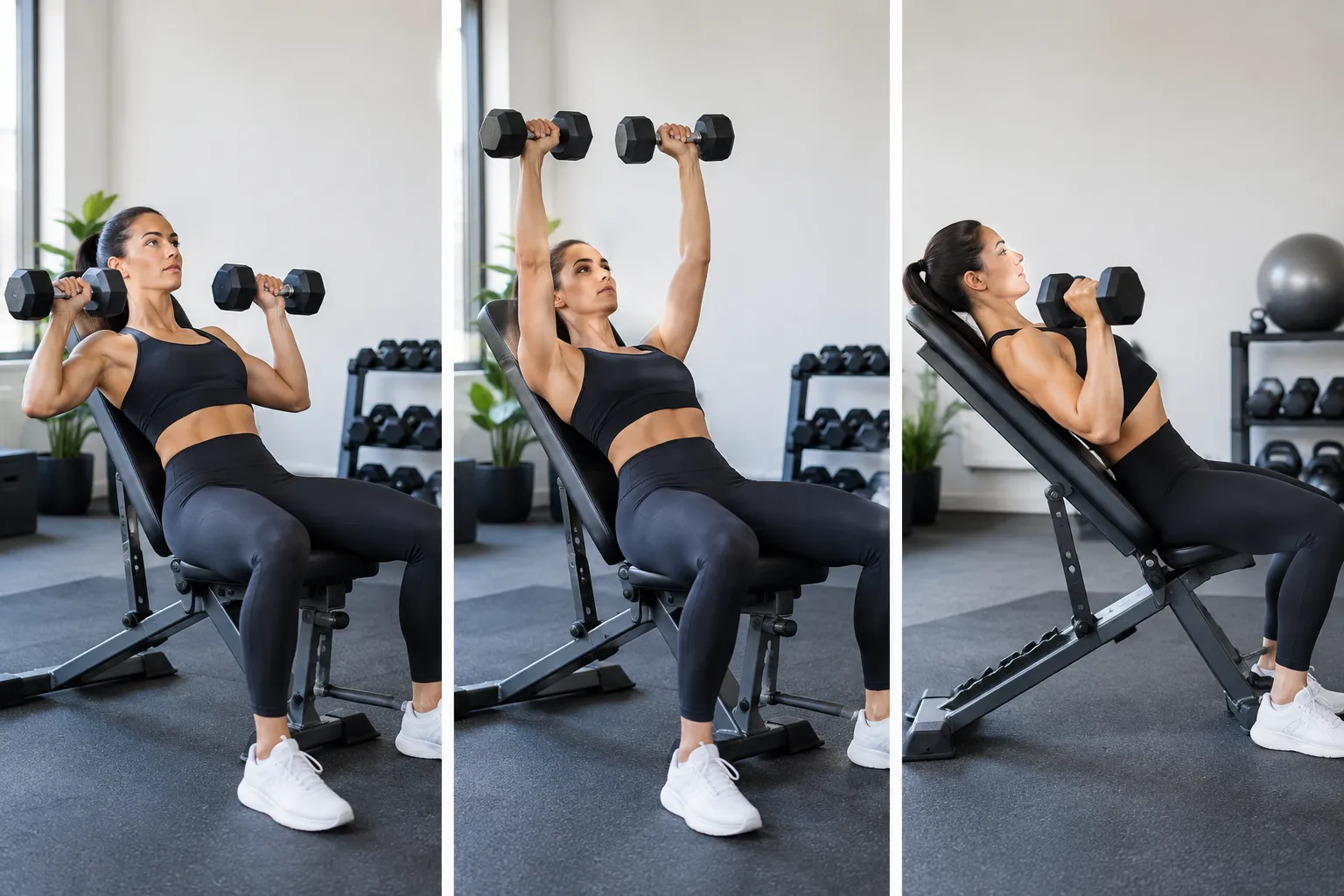
Choose dumbbells you can comfortably control before attempting heavier loads.
Sit on the bench with a dumbbell resting securely on each thigh. Use a controlled movement to guide the dumbbells towards your chest as you recline against the backrest.
Once you're in position:
- Plant your feet firmly on the floor.
- Keep your head and upper back supported by the bench.
- Hold the dumbbells beside your upper chest.
- Keep your wrists reasonably straight and positioned above your forearms.
- Press both dumbbells upward in a controlled path.
- Extend your arms without aggressively locking your elbows.
- Lower the dumbbells steadily towards the sides of your upper chest.
- Stop at a depth where you can maintain control and shoulder comfort.
- Repeat while keeping the movement consistent from one repetition to the next.
Your elbows do not need to flare directly out to the sides. Allow them to follow a comfortable pressing path.
Avoid allowing the dumbbells to crash together at the top of the movement.
Most importantly, don't turn the exercise into a competition to lift the heaviest possible dumbbells. If your hips move, your back arches excessively or one dumbbell begins dropping faster than the other, reduce the load or finish the set.
Choose a bench and dumbbells for your home gym
As your strength improves, getting heavier dumbbells safely into position can become challenging.
Sit with each dumbbell supported on a thigh. As you recline, use your legs to help guide the weights towards the starting position rather than trying to curl heavy dumbbells from the floor.
When you've finished the set, bring the dumbbells down under control.
Avoid routinely dropping dumbbells from the bench. This is particularly important with adjustable dumbbells, which contain adjustment and locking mechanisms that should be handled according to the manufacturer's instructions.
When using particularly heavy weights, a competent training partner or spotter can make getting into and out of position easier.
Common Incline Dumbbell Press Mistakes
Setting the Bench Too Steep
Increasing the incline does not automatically make the exercise better.
A very steep angle shifts more work towards the shoulders. If your objective is upper-chest training, begin with a moderate incline rather than immediately positioning the backrest close to upright.
Using Too Much Weight
If you cannot lower the dumbbells under control, the load is probably too heavy.
Choose a weight that allows consistent technique throughout the set.
Flaring the Elbows Excessively
Allow your elbows to follow a comfortable path rather than forcing them directly out to the sides.
Bending the Wrists Back
Try to keep the dumbbells positioned over your forearms rather than allowing your wrists to collapse backwards under load.
Excessive Back Arch
A small natural curve through the lower back is normal. A large arch used to move more weight or effectively turn the exercise into a flatter press usually indicates that the setup or load needs adjustment.
Dropping the Dumbbells
Lower the weights safely after your set rather than throwing them from shoulder height. This protects the dumbbells, your flooring and other people training nearby.
Choosing a Bench for Incline Dumbbell Presses
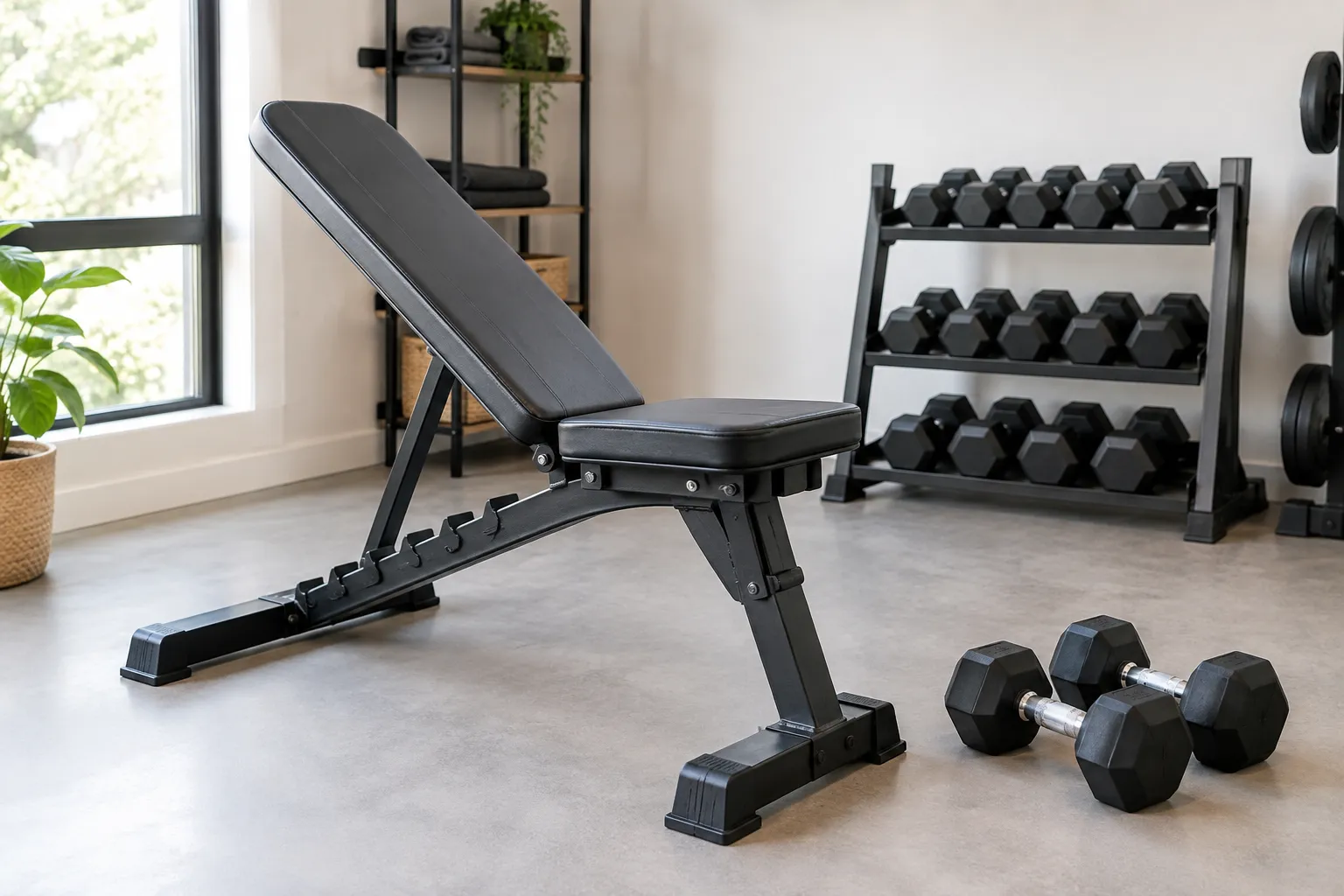
A quality adjustable weight bench is one of the most versatile pieces of strength equipment you can put in a home gym.
For incline dumbbell training, look for a bench with:
- Multiple secure backrest positions
- A stable frame
- Suitable load capacity
- Supportive backrest and seat padding
- A footprint appropriate for your available space
- Good stability when pressing heavier dumbbells
A bench offering both flat and multiple incline positions also gives you far more exercise options.
It can be used for flat dumbbell presses, incline presses, shoulder presses, dumbbell rows, fly variations, seated curls and numerous other exercises.
For a versatile home strength setup, consider the Vanguard Fitness Multi Adjustable Gym Weight Bench.
View the Vanguard Fitness Multi Adjustable Gym Weight Bench
Fixed vs Adjustable Dumbbells for Incline Pressing
Both fixed and adjustable dumbbells work well for incline pressing. The better option depends primarily on your available space, budget and training style.
Fixed Dumbbells
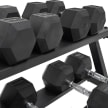
Fixed dumbbells are ready to use immediately. There are no selectors, plates or adjustment mechanisms to change between sets.
They're particularly convenient if several people use the same gym or you regularly change weights during workouts.
The downside is space. Building a useful progression of weights requires multiple pairs and eventually a suitable dumbbell rack.
Dumbbell Sets
A complete dumbbell set gives you multiple weight increments and makes progression straightforward.
This can be particularly useful for larger home gyms, personal training studios and commercial facilities where different users need different weights.
Adjustable Dumbbells
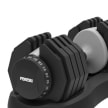
For compact home gyms, adjustable dumbbells provide multiple training loads while occupying considerably less storage space than a comparable collection of fixed dumbbells.
They are particularly useful for incline pressing because you can progressively increase resistance without buying and storing another pair of dumbbells every time your strength improves.
Fitness Network offers two BowFlex SelectTech options suited to different levels of home strength training.
BowFlex 552i SelectTech Adjustable Dumbbells
The BowFlex 552i SelectTech Adjustable Dumbbells are an excellent option for general home strength training.
Each dumbbell adjusts from approximately 2.3kg to 23.8kg, providing 15 weight settings in a compact system.
The broad adjustment range allows lighter resistance for exercises such as curls and raises while providing considerably more weight for presses, rows, lunges and other compound exercises.
For someone building a compact home gym and wanting one adjustable dumbbell system to cover a wide variety of exercises, the 552i provides an excellent balance between versatility, progression and space efficiency.
Best suited to: general home strength training, beginners through intermediate lifters and users prioritising a broad range of manageable weight increments.
Shop BowFlex 552i SelectTech Adjustable Dumbbells →
For most general home strength setups, the 552i offers the more accessible weight range.
If you're already reasonably strong or expect to progress into substantially heavier dumbbell pressing and rowing, the 1090i provides significantly more headroom.
The best choice therefore isn't necessarily based on what you lift today. Consider the resistance you're likely to need after another year or two of consistent training.
BowFlex 1090i SelectTech Adjustable Dumbbell
For stronger lifters who need substantially more resistance, the BowFlex 1090i SelectTech Adjustable Dumbbell provides considerably greater progression potential.
Each dumbbell adjusts from approximately 4.5kg to 40.8kg across 17 weight settings.
That makes the 1090i particularly attractive for heavier incline presses, flat dumbbell presses, rows, lunges and other strength exercises where users may quickly outgrow lighter adjustable dumbbells.
For incline dumbbell pressing specifically, the additional maximum weight provides experienced users with considerably more room for long-term strength progression.
The 1090i is available in single or pair configurations, so customers should select the required configuration when ordering.
Best suited to: experienced home lifters, heavier strength training and users who want substantially more long-term progression.
Shop BowFlex 1090i SelectTech Adjustable Dumbbell →
How Heavy Should Your Dumbbells Be?
There is no single correct dumbbell weight for incline pressing.
The appropriate resistance depends on your current strength, experience, training programme and intended repetition range.
A beginner may initially need relatively light dumbbells while learning to stabilise two independent weights. An experienced lifter may eventually require considerably heavier dumbbells for pressing movements than they use for isolation exercises such as curls or lateral raises.
Rather than choosing dumbbells based on what another person lifts, select a weight that allows you to maintain:
stable wrists, controlled lowering, consistent movement and good shoulder positioning.
Once you can comfortably complete your planned sets and repetitions with consistent technique, consider increasing the resistance gradually.
This is one reason a graduated fixed dumbbell set or adjustable dumbbell system can be particularly useful for long-term home training.
Building a Home Gym Around a Bench and Dumbbells
A quality bench and dumbbells can form the foundation of a surprisingly capable home strength setup.
With these two pieces of equipment you can train the chest, back, shoulders, arms and legs using exercises such as:
flat and incline presses, shoulder presses, dumbbell rows, split squats, lunges, goblet squats, curls, triceps exercises and lateral raises.
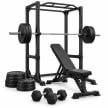
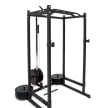
As your training progresses, you can expand the setup with barbells, weight plates, a power rack, gym flooring or an all-in-one trainer.
If you'd prefer to purchase equipment as a coordinated setup, explore our Home Gym Packages.
For more help planning your available space, see Do You Intend to Set Up a Home Gym?.
FAQs
Is incline dumbbell press better at 30 or 45 degrees?
For many people, around 30 degrees is an effective starting position because it provides an inclined pressing angle while maintaining a strong emphasis on the chest. Moving towards 45 degrees generally increases involvement of the front shoulders. Your bench may not offer exact degree settings, so choose the closest comfortable position that allows good technique.
What is the incline dumbbell press good for?
The incline dumbbell press trains the chest, shoulders and triceps, with the inclined position placing greater emphasis on the upper chest than a conventional flat dumbbell press. Because each arm controls its own dumbbell, the exercise also requires independent stabilisation.
How do you correctly do an incline dumbbell chest press?
Set an adjustable bench to a moderate incline and sit with a dumbbell supported on each thigh. Guide the dumbbells into position as you recline, plant your feet firmly and keep your upper back supported. Press the weights upward under control and lower them steadily towards your upper chest while maintaining stable wrists and comfortable shoulder positioning.
What are common incline dumbbell press mistakes?
Common mistakes include setting the bench too steep, using excessive weight, flaring the elbows excessively, bending the wrists backwards, losing control during the lowering phase, excessively arching the lower back and dropping the dumbbells after a set.
How many sets and reps should I do for the dumbbell incline press?
The appropriate number depends on your training programme and goal. A common approach is 2–4 working sets using a repetition range suited to your objective and experience. Beginners should prioritise consistent technique before increasing either volume or resistance.
How do I know when to increase the dumbbell weight?
Consider increasing the weight when you can complete your planned sets and repetitions with consistent technique and good control. Increase resistance gradually. If the heavier weight causes your range of motion or technique to deteriorate significantly, return to the previous load until you're ready to progress.
Can beginners include the incline dumbbell press in a workout?
Yes. The incline dumbbell press can be suitable for beginners provided the load is manageable and the movement is performed with control. Start with lighter dumbbells while learning how to position the weights safely and maintain stable movement.
How does the incline dumbbell press differ from the flat dumbbell press?
Both exercises train the chest, shoulders and triceps. The main difference is the bench angle. A flat dumbbell press provides a horizontal pressing movement, while an incline dumbbell press increases emphasis on the upper chest and front shoulders. Many strength programmes include both movements for variation.
Find the Right Equipment for Your Home Gym
A good incline dumbbell press setup doesn't require a room full of equipment. Start with a stable adjustable bench and dumbbells that provide suitable resistance for your current strength while leaving room to progress.
Fitness Network offers equipment for complete home strength setups, from individual dumbbells and adjustable dumbbells to benches, barbells, weight plates, power racks and complete home gym packages.