










1. Start With Your Training Goals
Walking and Everyday Fitness
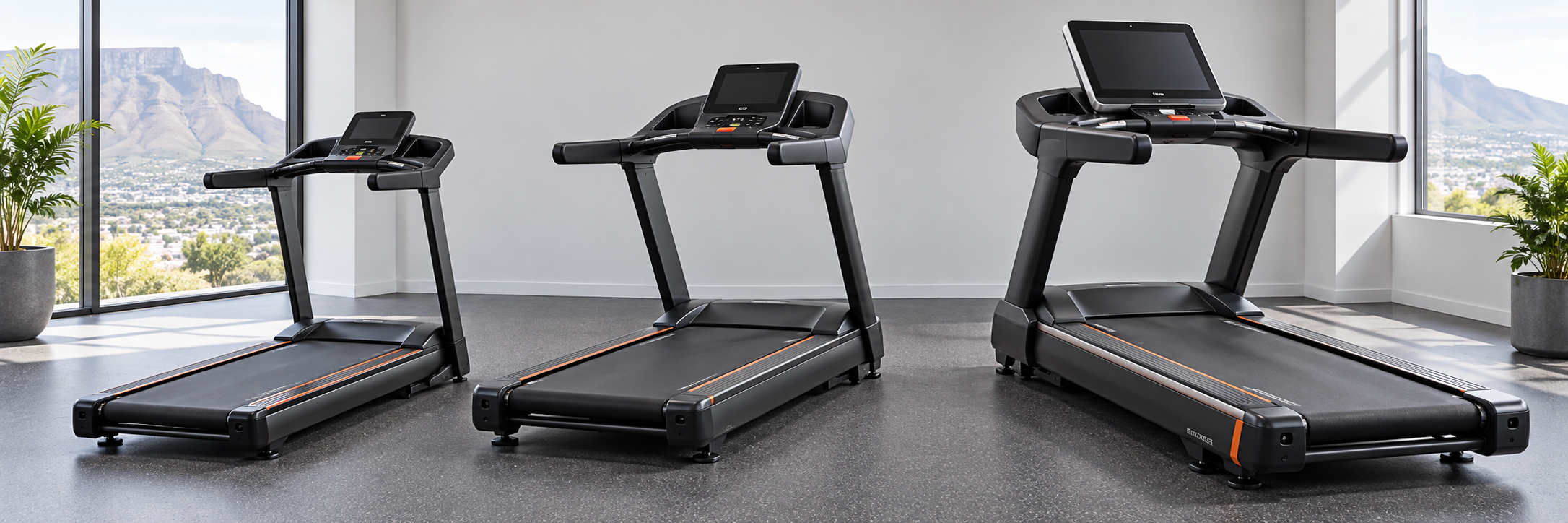
For walking and general home cardio, prioritise comfortable cushioning, straightforward controls and a running area that lets you move naturally. You may find these more useful than the highest available speed or a large entertainment screen.
The Vanguard Run X1.4 and Horizon T101 are options to consider in this group. The X1.4 offers speeds up to 18 km/h, while the T101 combines a 16 km/h top speed with QuickDial controls and a folding design.
Jogging and Regular Home Running
As your running becomes more frequent, running space, stability and the treadmill’s ability to support sustained workouts become more important. A longer deck gives you more room as your stride changes with pace.
Consider the Vanguard Run X1.6, Horizon T202 and Vanguard Run X1.8. Their running surfaces are longer than the X1.4’s, with top speeds of 20–22 km/h. Your body size, stride and intended training volume should guide the final choice.
Intervals and Performance Training
For interval workouts, look beyond maximum speed. Convenient controls and responsive speed and incline adjustments help you move between recovery and harder efforts.
The Horizon 7.4AT offers QuickDial controls and a wide running surface. The BowFlex T9 combines Quick Response Technology with compatible app connectivity. The Vanguard Run X1.8 offers a 22 km/h top speed for home performance training.
Connected Workouts and Entertainment
Decide whether you prefer to train with your own phone or tablet or want an integrated touchscreen. These are different ways to enjoy connected workouts, and neither is essential for ordinary treadmill use.
The BowFlex T9 works with compatible fitness apps through your own device. The Horizon Tread-XP includes a 23.8-inch Full HD touchscreen that rotates up to 90 degrees, with built-in training experiences and device mirroring. Check app compatibility, any subscription charges and which functions are supported before buying.
2. Choose a Running Deck That Suits Your Stride
The running area is the usable belt surface, not the treadmill’s overall size. Both its length and width affect how much room you have while exercising.
Compare the Vanguard models: the Run X1.4 has a 130 × 46 cm running area, the X1.6 measures 150 × 51 cm and the X1.8 measures 155 × 51 cm. Moving up the range gives you more running space as well as different performance specifications.
Wider decks, such as those on the Horizon 7.4AT, Paragon X and Tread-XP, can appeal to runners who want more room. Taller users and runners with longer strides should pay particular attention to deck length. Where possible, try a treadmill at your normal walking or running pace before choosing.
3. Understand Speed, Incline and Motor Specifications
A treadmill’s top speed tells you its available pace range, but does not establish its overall build quality or suitability for prolonged use. Consider speed together with the deck, construction, intended operating environment and warranty.
Incline adds variety and lets you incorporate hill workouts without always increasing speed. However, incline levels and incline percentages are different measurements. A treadmill offering 16 levels does not necessarily have a 16% maximum gradient.
Motor ratings also need context. Peak horsepower and continuous-duty horsepower are different ratings, and AC and DC motor figures should not be treated as a simple ranking of quality. Choose a treadmill designed for your expected use, rather than selecting it on the horsepower number alone.
4. Compare Home and Performance Treadmills
The recommendations below describe the main reason to consider each model. The final choice should also account for user weight, training duration and available space.
| Treadmill | Best suited to | Top speed | Running area Length × width | Incline | Price |
|---|---|---|---|---|---|
| Vanguard Run X1.4 | Walking, jogging and everyday home fitness | 18 km/h | 130 × 46 cm | 16 levels | View current price |
| Horizon T101 | Walking and light running with convenient controls | 16 km/h | 140 × 50 cm | 0–10% | View current price |
| Vanguard Run X1.6 | Regular home running with a longer deck | 20 km/h | 150 × 51 cm | 12 levels | View current price |
| Horizon T202 | Home running and hill workouts | 20 km/h | 152 × 51 cm | 0–12% | View current price |
| Vanguard Run X1.8 | Faster running and performance training at home | 22 km/h | 155 × 51 cm | 12 levels | View current price |
| Horizon 7.4AT | Regular runners and interval training with a wider deck | 20 km/h | 153 × 56 cm | 0–15% | View current price |
| Horizon Paragon X | Home running with adjustable Air Runner cushioning | 20 km/h | 153 × 56 cm | 0–12% | View current price |
| BowFlex T9 | Connected running using compatible apps and your own device | 20 km/h | 152 × 56 cm | 0–15% | View current price |
| Horizon Tread-XP | Premium home running with a rotating touchscreen | 20 km/h | 153 × 56 cm | 0–15% | View current price |
5. When Should You Choose a Commercial Treadmill?
A shared gym places different demands on equipment from a single-user home setup. Hotels, corporate gyms, personal training studios and fitness facilities should choose a treadmill whose operating rating and warranty suit the actual environment and expected daily usage.
A home treadmill does not become a commercial machine simply because it has a high top speed or a motor described as powerful. Equally, commercial equipment can be a suitable option for a home buyer who wants greater durability and has the space for a larger machine.
| Treadmill | Main difference | Top speed | Running area Length × width | Incline | Price |
|---|---|---|---|---|---|
| Vanguard Run XC2.4 | Commercial construction with a 4 HP AC motor | 20 km/h | 150 × 56 cm | 15 levels | View current price |
| Vanguard Run XC2.8 | Larger running deck and 6 HP AC motor | 22 km/h | 160 × 57 cm | 18 levels | View current price |
| Vision T600 | Commercial platform with a 4.2 HP AC drive system and LED console | 22 km/h* | 152 × 55.4 cm | 0–15% | View current price |
| Vision T600E | Vision commercial platform with a 22-inch touchscreen and entertainment features | 22 km/h* | 152 × 55.4 cm | 0–15% | View current price |
*Vision speeds shown are for the South African 220 V versions. Confirm suitability and warranty coverage for your facility’s expected usage.
6. Check Space, User Capacity and Ownership Costs
Measure the Whole Training Space
Check the treadmill’s assembled dimensions and the manufacturer’s required clearance around it. Include ceiling height, especially when using incline, and measure doorways and access routes for delivery. A folding deck can help reclaim floor space between workouts, but the folded machine still needs room.
Confirm Maximum User Weight
Check the confirmed capacity for the exact model and version you intend to buy. For a shared treadmill, consider the heaviest intended user as well as how often and how long everyone will train. A weight limit alone does not tell you whether a machine is suitable for your usage pattern.
Understand Delivery, Installation and Warranty
Before ordering, confirm stock availability, delivery timing, assembly requirements and the installation options for your location. Ask what is covered under the frame, motor, parts and labour warranties, whether home and commercial cover differ, and what maintenance is required.
Also check any optional service plan, installation charge or training-app subscription. These can affect the total cost of ownership even when the purchase prices of two treadmills are similar.
Frequently Asked Questions
Which treadmill is best for walking?
A comfortable home treadmill with simple controls can be a good starting point. Consider the Vanguard Run X1.4 or Horizon T101, then check that the deck, user capacity and available space suit you.
Which treadmill should I choose for regular running?
Start by comparing the Vanguard X1.6 and X1.8, Horizon T202 and 7.4AT. Your preferred pace, stride, weekly training volume and need for connected features will help narrow the choice.
Do I need a touchscreen?
No. A conventional console can provide the feedback you need for walking and running. A touchscreen is useful if you value integrated workouts and entertainment; app-compatible models can also let you use your own device.
Can I use a home treadmill in a hotel or studio?
Confirm the operating rating and warranty before doing so. Shared facilities should select equipment approved for their environment and expected usage, rather than assuming a home model will be suitable.
Should I choose a motorless curved treadmill for HIIT?
A motorless curved treadmill is another option for interval and conditioning workouts. You control the belt speed through your movement, which creates a different training experience from a motorised treadmill. Try both styles or speak with a specialist before choosing.