










What Is a Kettlebell?
A kettlebell is a compact weight with a handle positioned above its main body. Unlike a traditional dumbbell, its weight distribution allows it to be used for both controlled strength exercises and dynamic movements.
Kettlebells are particularly versatile because they can be used for:
- Strength training and muscle development
- Functional fitness and conditioning
- Hip-hinge movements and kettlebell swings
- Squats, presses and rows
- Grip strength and loaded carries
- Home gym and commercial gym workouts
Their relatively compact design also makes kettlebells a practical choice for home training spaces where larger gym equipment may not be suitable.
Types of Kettlebells: Cast Iron vs Competition Kettlebells
Although kettlebells may look similar, their construction, shape and handle design can influence how they feel and perform during exercise.
Traditional Cast Iron Kettlebells
Traditional kettlebells are commonly manufactured from cast iron, with the overall dimensions generally increasing as the weight increases.
They are suitable for a wide variety of exercises, including kettlebell swings, goblet squats, deadlifts, rows and carries.
For general home fitness, traditional kettlebells can be a practical option because they offer straightforward functionality for strength and conditioning.
Competition Kettlebells
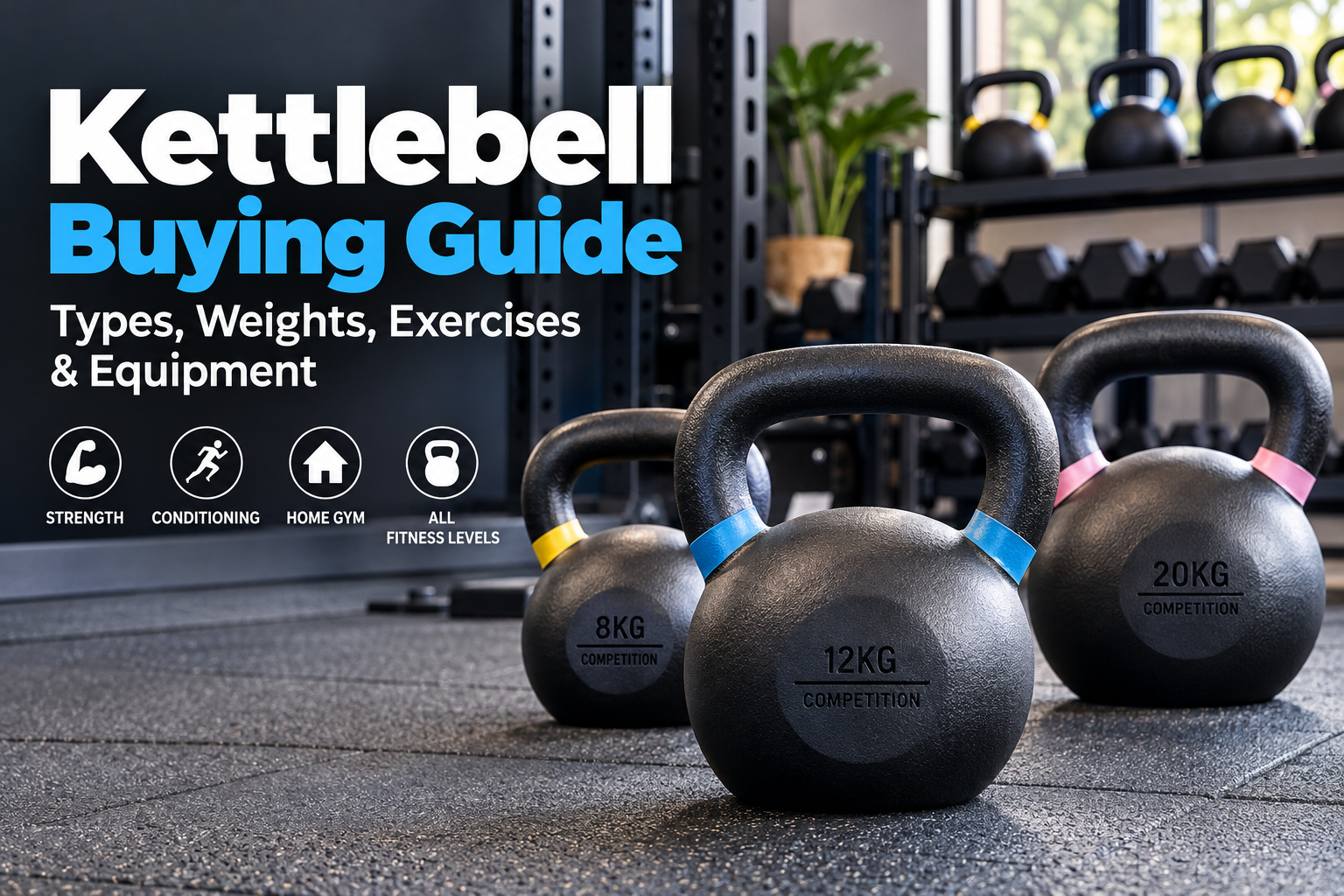
Competition-style kettlebells are designed to maintain relatively consistent external dimensions across different weight options.
This means an 8kg competition kettlebell and a heavier competition kettlebell can have similar overall dimensions, although their internal construction and weight differ.
The consistent size can make it easier to maintain familiar hand positioning and movement technique when progressing between weights.
Competition kettlebells are suitable for both specialised kettlebell sport and general strength training.
Fitness Network offers competition-style kettlebells from established fitness equipment brands.
Explore our ranges:
Traditional vs Competition Kettlebells: Comparison
| Feature | Traditional Kettlebells | Competition Kettlebells |
| Construction | Commonly cast iron | Commonly steel |
| External size | Generally increases with weight | Designed to remain consistent |
| Handle design | Varies between manufacturers | Designed for consistent handling |
| Ideal applications | General strength and conditioning | Strength, conditioning and kettlebell sport |
| Home gym suitability | Excellent | Excellent |
| Main advantage | Versatility and familiar design | Consistent handling between weights |
Which should you choose?
For general home fitness, both types can be suitable. Competition kettlebells may appeal to users who want consistent handling as they increase their training weight, while traditional kettlebells remain an effective option for general strength and conditioning.
Your choice should ultimately depend on comfort, intended exercises, available weights and budget.
How to Choose the Right Kettlebell Weight
Choosing the correct kettlebell weight is one of the most important decisions when buying kettlebells.
A kettlebell that is too heavy can make it difficult to maintain correct technique, while a weight that is too light may not provide sufficient resistance as your strength develops.
There is no universal starting weight that suits everyone. Your ideal weight depends on your existing strength, exercise experience and intended movements.
Choosing a Kettlebell for Beginners
If you're new to kettlebell training, prioritise learning correct technique before increasing resistance.
Start with controlled exercises such as:
- Kettlebell deadlifts
- Goblet squats
- Suitcase carries
- Supported single-arm rows
- Basic presses using an appropriate weight
You should be able to lift, lower and control the kettlebell without losing balance or changing your posture.
A weight suitable for deadlifts or squats may be too heavy for overhead pressing, so consider the exercises you plan to perform before purchasing.
Kettlebell Weight Selection Guide
| Training goal | Weight selection advice |
| Learning technique | Start with a light, manageable kettlebell |
| General fitness | Choose a weight suitable for controlled full-body exercises |
| Strength development | Use progressively heavier resistance as technique improves |
| Swings and conditioning | Select a weight that allows safe, repeatable hip-hinge movements |
| Presses and upper-body exercises | A lighter weight may be necessary |
| Advanced kettlebell training | Consider multiple weights for different exercises |
Rather than choosing a weight based only on age, gender or a general recommendation, select one that allows you to maintain control throughout the movement.
As your strength improves, gradually increasing resistance can help you continue progressing.
For more advice, read our guide to knowing when to increase your training weights.
What Should You Look for When Buying a Kettlebell?
The weight is important, but several other features can influence comfort, durability and training performance.
1. Handle Comfort and Grip
A comfortable handle is essential for kettlebell training.
Check that the handle provides enough room for your hand and allows a secure grip during exercises.
For two-handed swings, the handle should provide sufficient space for both hands.
For single-arm exercises, the handle should allow your hand and wrist to settle into a comfortable position.
2. Kettlebell Construction
Look for a kettlebell with solid construction, a secure handle and a consistent finish.
Inspect the product photographs and specifications for information about materials and manufacturing quality.
3. Stable Base
A flat, stable base makes it easier to place the kettlebell safely on the floor between exercises.
This is particularly useful for home gyms where equipment may be stored in a limited space.
4. Surface Finish
The handle should provide a secure grip without being excessively rough or uncomfortable.
The body finish should also be suitable for regular handling and storage.
5. Available Weight Options
Consider whether the product range offers heavier weights for future progression.
Choosing a consistent kettlebell range can make it easier to expand your collection as your training requirements change.
Best Kettlebell Exercises for Home Workouts
Kettlebells can be used for a wide range of movements targeting the upper body, lower body and core.
Here are several popular exercises to consider.
Kettlebell Swings
Kettlebell swings are dynamic exercises that primarily use the hips and posterior chain.
The movement begins with a hip hinge, followed by a controlled extension of the hips that drives the kettlebell forward.
The arms guide the kettlebell rather than lifting it primarily with the shoulders.
Training benefits: Hip strength, conditioning, coordination and muscular endurance.
Beginners should learn the hip-hinge and deadlift patterns before progressing to swings.
Goblet Squats
A goblet squat involves holding a kettlebell close to the chest while performing a squat.
This exercise can help develop lower-body strength while challenging posture and core stability.
Training benefits: Quadriceps, glutes, core strength and squat technique.
Kettlebell Deadlifts
The kettlebell deadlift is an effective foundational exercise for learning how to hinge at the hips.
It can be performed at a controlled pace, making it useful for developing technique before introducing more dynamic movements.
Training benefits: Glutes, hamstrings and general lower-body strength.
Kettlebell Shoulder Press
The kettlebell shoulder press involves pressing a kettlebell from shoulder level to overhead.
Use a manageable weight that allows controlled movement without excessive leaning or twisting.
Training benefits: Shoulders, triceps and upper-body stability.
Single-Arm Kettlebell Rows
Single-arm rows train the back and arm muscles while challenging trunk stability.
Support your free hand on a stable surface where appropriate, and avoid twisting your torso to move the weight.
Training benefits: Back strength, grip strength and upper-body development.
Kettlebell Carries
Carries involve walking while holding one or more kettlebells.
Suitcase carries, where the kettlebell is held at one side, are particularly useful for challenging grip strength and resisting sideways leaning.
Training benefits: Grip strength, posture, core stability and conditioning.
Kettlebell Training Safety Tips
Correct technique and appropriate weight selection are essential for safe kettlebell training.
Before beginning your workout:
- Ensure the training area is clear of obstacles, pets and other people.
- Use a stable, non-slip training surface.
- Inspect the kettlebell for damage before use.
- Start with controlled exercises before attempting dynamic movements.
- Maintain proper posture and avoid using momentum to compensate for poor technique.
- Stop exercising if you experience pain, dizziness or unusual discomfort.
- Allow adequate recovery between demanding workouts.
Beginners may benefit from instruction from a qualified fitness professional, particularly when learning technical movements such as kettlebell swings, cleans and snatches.
Building a Home Gym with Kettlebells
Kettlebells are an excellent addition to a home gym because they offer multiple training options without requiring a large amount of space.
However, kettlebells do not need to be your only piece of equipment.
Combining kettlebells with other strength training products can create a more versatile training environment.
Adjustable Weight Benches
An adjustable bench can support exercises such as dumbbell presses, rows and seated strength movements.
Dumbbells and Free Weights
Dumbbells provide additional training options and may be easier to use for certain isolated upper-body exercises.
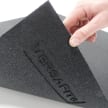
Gym Flooring
Suitable rubber gym flooring can help protect the underlying surface, reduce noise and provide a stable area for strength training.
Kettlebell Storage
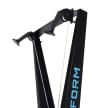
If you plan to own several kettlebells, a dedicated storage rack can help organise your training area and keep equipment safely positioned between workouts.
View the Vanguard Fitness Competition Kettlebell Rack.
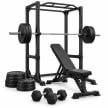
For customers planning a more comprehensive training space, Fitness Network also offers a wide range of home gym equipment.
Buying Kettlebells in South Africa
When purchasing kettlebells in South Africa, consider more than the advertised price.
Compare the product's construction, available weight options, handle design and suitability for your intended training.
It is also worth considering the reliability of the supplier, product availability and delivery options.
At Fitness Network, customers can explore kettlebells alongside other home and commercial strength training equipment, making it easier to build a coordinated training setup.
Our range includes competition-style kettlebells suitable for general strength training, functional fitness and conditioning.
Explore Kettlebells for Sale at Fitness Network
Frequently Asked Questions About Kettlebells
Can kettlebell training help reduce belly fat?
Kettlebell workouts can contribute to overall calorie expenditure and improved fitness when combined with regular exercise and appropriate nutrition.
Exercises such as swings, squats and carries can involve multiple muscle groups, making them useful for strength and conditioning.
However, kettlebell exercises cannot specifically target belly fat. Fat loss occurs across the body, and results depend on factors including overall activity, nutrition and consistency.
Is doing kettlebell swings every day a good idea?
Kettlebell swings can be included in a regular training programme, but daily high-intensity sessions are not necessary for most people.
Beginners should allow sufficient recovery time while developing their technique and conditioning.
Training frequency should depend on the weight used, workout intensity, experience and recovery. Start with manageable sessions and increase the workload gradually.
Can kettlebell swings alone build muscle?
Kettlebell swings can help develop strength and muscular endurance, particularly through the hips, glutes and hamstrings.
However, swings alone are unlikely to provide a complete muscle-building programme.
For more balanced strength development, combine them with exercises such as goblet squats, presses, rows, lunges and carries.
Progressive resistance and adequate recovery are important for continued development.
How often should beginners do kettlebell workouts?
For many beginners, two or three kettlebell sessions per week can be a practical starting point, with recovery between demanding workouts.
Begin with controlled exercises such as deadlifts, goblet squats and carries before progressing to more technical movements.
Session frequency and duration should reflect your fitness level, training goals and ability to maintain good technique.
Should I buy one kettlebell or a pair?
One kettlebell is sufficient for many beginner exercises, including swings, goblet squats, single-arm presses, rows and suitcase carries.
Starting with one weight allows you to learn proper technique before investing in additional equipment.
A pair becomes useful when progressing to double-kettlebell exercises such as front squats, carries and presses.
Choose weights according to the movements you intend to perform.
Are competition kettlebells suitable for home workouts?
Yes. Competition kettlebells are suitable for home training as well as specialised kettlebell sport.
Their consistent external dimensions across different weights can help users maintain a familiar grip and lifting position as they progress.
They are useful for swings, cleans, presses, snatches and other functional exercises.
The best choice depends on your experience, preferred movements and handle comfort.
What flooring is best for kettlebell exercises at home?
A firm, level, non-slip surface is important for kettlebell training.
Rubber gym flooring can help protect the underlying floor, improve grip and reduce noise when equipment is placed down.
The appropriate thickness depends on the weight being used and the type of training.
Avoid unstable mats or surfaces that shift underfoot, and never deliberately drop heavy kettlebells onto flooring that is not designed for impact.
How should I store and care for a kettlebell?
Store kettlebells on a stable, dry surface away from walkways and areas where they could be knocked over.
Wipe away moisture after training and regularly inspect the handle, body and base for damage or corrosion.
If you own several kettlebells, a dedicated storage rack can help keep the training area organised and make different weights easier to access.
Always check that the rack is suitable for the weight and dimensions of your equipment.
Find the Right Kettlebell at Fitness Network
Whether you're starting your fitness journey or adding new equipment to an established training routine, kettlebells offer a versatile solution for strength training and conditioning.
The right kettlebell should suit your experience, training goals and preferred exercises while providing a comfortable grip and reliable construction.
At Fitness Network, we offer competition-style kettlebells from Force USA and Vanguard Fitness, together with a comprehensive selection of home and commercial gym equipment.
Explore our kettlebell range and find the right equipment for your training goals.
Shop Kettlebells at Fitness Network