






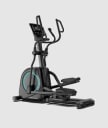






of an elliptical trainer is that your feet remain supported by the pedals throughout the movement.
This reduces the repeated landing impact associated with running.
However, lower impact does not automatically mean that every elliptical trainer is suitable for every person. The stride pattern, resistance and individual comfort still matter.
Upper- and Lower-Body Movement
Many elliptical trainers feature moving handlebars that coordinate with the pedals.
This allows users to involve their arms and shoulders alongside the lower body.
The legs remain the primary drivers of the movement, while the arms can contribute additional effort.
Adjustable Workout Intensity
Resistance settings allow users to vary the difficulty of their workouts.
Beginners may prefer a comfortable, steady pace, while experienced users can incorporate more challenging resistance levels and interval sessions.
Convenient Indoor Training
An elliptical trainer provides a consistent exercise environment regardless of outdoor weather conditions.
For customers who enjoy regular cardio workouts, this can make training easier to incorporate into a weekly routine.
3. Types of Elliptical Trainers
Elliptical trainers differ in the positioning of their drive systems, stride mechanisms and intended usage.
The three common designs are front-drive, rear-drive and centre-drive ellipticals.
Front-Drive Elliptical Trainers
Front-drive ellipticals position the main drive mechanism towards the front of the machine.
Depending on the design, the movement may feel somewhat similar to climbing or walking uphill.
Some front-drive machines have a compact layout, although overall dimensions vary.
Rear-Drive Elliptical Trainers
Rear-drive ellipticals position the main drive mechanism towards the back.
Many designs aim to provide a smooth, flowing stride.
The footprint and movement characteristics depend on the specific machine rather than drive position alone.
Centre-Drive Elliptical Trainers
Centre-drive designs position the drive mechanism closer to the user's body.
Some provide a relatively upright exercise position and compact footprint.
These machines are less common than traditional front-drive and rear-drive designs.
Elliptical Trainer Design Comparison
| Design | Main characteristic | What to consider |
|---|---|---|
| Front-drive | Drive mechanism positioned towards the front | Stride feel, footprint and pedal path |
| Rear-drive | Drive mechanism positioned towards the rear | Movement comfort and overall length |
| Centre-drive | Drive mechanism positioned closer to the user | Footprint, posture and availability |
Important: Drive position alone does not determine quality. Stride comfort, construction, resistance and intended usage are more useful buying considerations.
4. Why Elliptical Stride Length Matters
Stride length is one of the most important specifications when choosing an elliptical trainer.
It describes the distance the pedals travel from front to back during their movement cycle.
A stride that is too short may feel cramped, while one that is too long may feel uncomfortable or difficult to control.
How to Choose the Right Stride Length
The ideal stride depends on the user's height, natural movement and personal preference.
Taller users may prefer a longer stride, but height alone is not enough to determine the correct fit.
If possible, test the machine before purchasing.
Pay attention to:
- Whether the movement feels natural
- Whether your feet remain comfortably positioned
- Whether your knees and hips move without discomfort
- Whether you can maintain a relaxed posture
- Whether the handles are within comfortable reach
For households with several users, consider the comfort requirements of everyone who will use the machine.
5. Understanding Elliptical Resistance Systems
Resistance controls how difficult it is to move the pedals.
Many elliptical trainers use magnetic or electronically controlled resistance systems.
Magnetic Resistance
Magnetic resistance uses magnets to create resistance against a rotating component.
This can provide smooth adjustment without requiring a friction pad to press directly against the flywheel.
The exact system and available resistance range vary by model.
Electronic Resistance Control
Some elliptical trainers allow resistance to be adjusted electronically through console buttons or preset workout programmes.
This can be useful for structured training sessions where resistance changes during the workout.
Self-Generating Elliptical Trainers
Some commercial elliptical trainers generate the electricity required for their console during use.
This can reduce the need for a nearby mains power connection.
Always confirm the electrical requirements of the specific model.
How Many Resistance Levels Do You Need?
More resistance levels do not automatically mean a better workout.
A machine with fewer well-designed resistance settings may provide a more useful training experience than one with many poorly differentiated levels.
Consider how smoothly resistance changes and whether the available range suits your current and future fitness goals.
6. Elliptical Trainer Comfort and Ergonomics
Comfort is essential when choosing an elliptical trainer, especially for longer workouts.
Pedal Design
Look for pedals that provide adequate space and a stable standing position.
Some machines include textured or cushioned pedal surfaces.
The distance between the pedals can also influence comfort.
Handlebar Position
Moving handlebars should be within comfortable reach without requiring excessive forward leaning.
Fixed handlebars may provide an alternative grip position for balance.
Frame Stability
A stable frame helps create a controlled workout experience.
Check the manufacturer's maximum user weight and intended usage classification.
Commercial facilities should prioritise machines designed for frequent use by multiple people.
Mounting and Dismounting
Consider how easily users can step onto and off the machine.
Pedal height and frame design can influence accessibility.
Follow the manufacturer's instructions for mounting and dismounting safely.
7. How Much Space Does an Elliptical Trainer Need?
Elliptical trainers can occupy more floor space than some other cardio machines.
Before purchasing, measure the available workout area carefully.
Consider the machine's:
- Assembled length and width
- Overall height
- Pedal height during movement
- Required clearance around moving parts
- Ceiling clearance for the tallest user
- Access through doors and passages
- Delivery and installation requirements
Remember that the machine's listed dimensions do not necessarily include all the clearance needed for comfortable use.
A protective floor mat may be useful where appropriate, provided it offers a stable surface.
8. Elliptical Trainer vs Treadmill: Which Is Better?
Both machines can provide effective cardiovascular exercise, but they offer different workout experiences.
| Feature | Elliptical Trainer | Treadmill |
|---|---|---|
| Main movement | Guided elliptical stride | Walking or running |
| Foot impact | Feet remain supported on pedals | Repeated foot contact |
| Upper-body movement | Moving handles on many models | Primarily natural arm swing |
| Resistance control | Adjustable pedal resistance | Speed and often incline |
| Workout preference | Smooth, guided cardio | Walking, jogging or running |
| Space requirements | Varies by design | Varies by treadmill |
Choose an elliptical trainer if you prefer a guided, lower-impact movement.
Choose a treadmill if walking or running is your preferred form of exercise.
Neither is universally better. The right choice depends on your goals, comfort and training preferences.
9. Best Elliptical Trainers to Consider at Fitness Network
Fitness Network offers elliptical trainers for customers comparing home and commercial cardio equipment.
The following models are useful starting points.
Vanguard Fitness PE2.4 Performance Elliptical Trainer
The Vanguard Fitness PE2.4 Performance Elliptical Trainer is designed for commercial fitness environments and demanding cardio applications.
Key published specifications include:
- 50 cm stride length
- Magnetic resistance system
- 32 resistance levels
- 30 preset workout programmes
- LED console
- Maximum user weight of 150 kg
- Bluetooth connectivity
This model is worth considering for customers who want a substantial elliptical trainer with a broad selection of resistance settings and training programmes.
View the Vanguard Fitness PE2.4 Performance Elliptical Trainer
Vision Fitness S60 Performance Suspension Elliptical
The Vision Fitness S60 Performance Suspension Elliptical is designed for full commercial use.
Its suspension-based design aims to deliver a smooth, controlled exercise movement.
Published features include:
- Suspension elliptical design
- 53.3 cm stride length
- 25 resistance levels
- Oversized pedals with rubber inserts
- Self-powered operation
- Maximum user weight of 182 kg
- Heavy-duty steel frame
The S60 is particularly relevant for commercial gyms, hotels, corporate fitness facilities and customers seeking a premium commercial elliptical.
View the Vision Fitness S60 Performance Suspension Elliptical
Which Elliptical Trainer Should You Choose?
| Feature | Vanguard PE2.4 | Vision S60 |
|---|---|---|
| Intended usage | Commercial | Full commercial |
| Published stride length | 50 cm | 53.3 cm |
| Resistance levels | 32 | 25 |
| Maximum user weight | 150 kg | 182 kg |
| Main distinction | Magnetic resistance and preset programmes | Suspension design and self-powered operation |
| Suitable buyer | Commercial cardio buyers comparing features | Facilities prioritising suspension design and durability |
Both are commercial-oriented machines. Customers looking for a compact, lower-budget home elliptical should compare dedicated home models separately rather than assuming either commercial machine is the best fit.
Explore Commercial Elliptical Trainers at Fitness Network
10. Home vs Commercial Elliptical Trainers
Choosing between home and commercial equipment depends largely on expected usage.
Home Elliptical Trainers
Home models are generally intended for personal use by one or a few household members.
When comparing them, prioritise:
- Comfortable stride length
- Manageable dimensions
- Appropriate resistance
- User weight capacity
- Console simplicity
- Warranty terms
Commercial Elliptical Trainers
Commercial models are designed for more demanding environments where multiple people may use the equipment throughout the day.
Important considerations include:
- Frame durability
- Commercial usage rating
- User weight capacity
- Serviceability
- Resistance-system reliability
- Warranty and support
- Ease of use for different members
For commercial facilities, equipment suitability should be evaluated against expected traffic and the manufacturer's intended usage classification.
11. Elliptical Trainer Buying Checklist
Before purchasing, ask yourself:
- Is the machine designed for home or commercial use?
- Does the stride length suit the intended users?
- Are the pedals and handlebars comfortable?
- Is the resistance range suitable for your workouts?
- Does the console offer the features you need?
- Is the maximum user weight appropriate?
- Will the machine fit your available floor space?
- Is there sufficient ceiling clearance?
- Does it require mains electricity?
- What are the delivery, installation and warranty arrangements?
A machine that fits comfortably and suits your routine is usually a better investment than one chosen solely for its feature list.
Frequently Asked Questions About Elliptical Trainers
What is the best elliptical machine for home use?
The best elliptical trainer for home use depends on your available space, budget, stride preference and fitness goals.
Look for a machine that feels comfortable, has suitable resistance settings and is rated for your expected usage.
If possible, try the movement before buying.
What are the disadvantages of using an elliptical?
Elliptical trainers require dedicated floor space, and some machines can be relatively large or heavy.
The guided stride may not feel natural to every user, particularly if the stride length is unsuitable.
Ellipticals also provide a different movement from outdoor walking or running.
Is an elliptical or treadmill better for home cardio?
Both can provide effective cardiovascular exercise.
An elliptical may appeal to people who prefer continuous foot support and a guided movement.
A treadmill is better suited to customers who specifically want to walk, jog or run indoors.
Choose according to your preferred activity, comfort and available space.
Is 30 minutes on an elliptical a day enough exercise?
Thirty minutes of elliptical training can make a meaningful contribution to weekly physical activity.
General adult guidelines recommend at least 150 minutes of moderate-intensity aerobic activity per week, or an equivalent amount of vigorous activity, together with muscle-strengthening exercise.
The benefits depend on your workout intensity, fitness level and overall activity.
Can an elliptical workout help with weight loss around the waist?
Elliptical exercise can contribute to overall energy expenditure and support weight management.
However, it cannot specifically target fat loss around the waist.
Changes in body fat depend on overall energy balance, nutrition and other individual factors.
How long on an elliptical is comparable to 10,000 steps?
There is no reliable fixed conversion between elliptical workout time and 10,000 walking steps.
Stride patterns, cadence and tracking methods differ.
Instead of attempting a direct conversion, monitor workout duration, intensity and progress over time.
Should I try an elliptical machine before buying one?
Testing an elliptical trainer can be useful because stride comfort is highly individual.
Check whether the pedals, handles and movement feel natural.
If you cannot test the machine, review the specifications carefully and discuss your requirements with the supplier.
How often should I maintain an elliptical machine?
Maintenance requirements depend on the manufacturer's recommendations and how frequently the equipment is used.
Keep the machine clean, follow the prescribed inspection schedule and check for unusual noises or movement.
Commercial equipment may require more frequent inspection because of heavier usage.
Always follow the manufacturer's servicing instructions.
Find the Right Elliptical Trainer at Fitness Network
Choosing the right elliptical trainer involves more than comparing prices or resistance levels.
Stride length, pedal comfort, frame stability, available space and intended usage all influence your training experience.
Whether you're equipping a home gym, corporate fitness centre or commercial facility, choosing equipment suited to your needs can make cardio training more comfortable and sustainable.
At Fitness Network, we offer elliptical trainers and commercial cardio equipment from established fitness equipment brands, with product guidance to help you compare available options.
Explore Commercial Elliptical Trainers