













1. How Does Skipping Rope Help with Weight Loss?
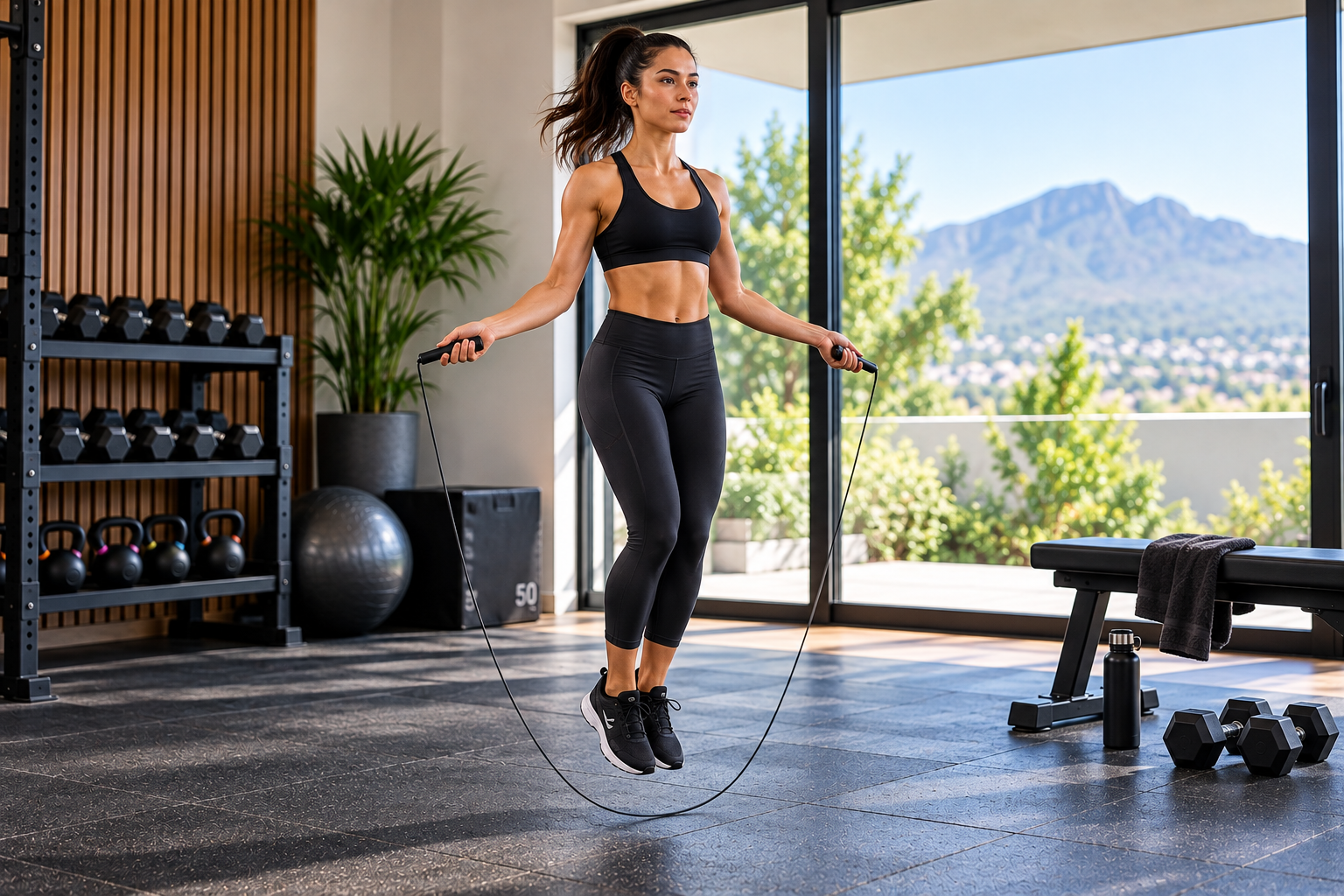
Skipping rope is a cardiovascular exercise that involves repeated jumps while rotating a rope beneath your feet.
It engages several muscle groups and can increase your breathing rate and heart rate.
Skipping can support weight management in three important ways.
Increases Energy Expenditure
Like walking, cycling and running, skipping uses energy.
The amount depends on your body size, workout intensity, duration and individual fitness level.
Improves Cardiovascular Fitness
Regular skipping can contribute to aerobic fitness and endurance.
As your conditioning improves, you may find it easier to complete longer sessions or increase your training intensity.
Supports a Consistent Exercise Routine
Skipping ropes are relatively inexpensive, portable and easy to store.
This makes skipping a convenient exercise option for people who want to train at home or add short cardio intervals to their existing workouts.
Remember: You cannot choose where your body loses fat. Skipping may contribute to overall fat loss, but it cannot specifically target belly fat.
2. How Many Minutes of Skipping Should Beginners Do?
If you're new to skipping, start with short sessions rather than trying to complete a long workout immediately.
Skipping involves repeated impact, so your feet, calves and lower legs need time to adapt.
A beginner might start with 20–30 seconds of skipping followed by 40–60 seconds of rest.
Repeat this for a few rounds, depending on your comfort and fitness level.
As your coordination and conditioning improve, gradually increase your skipping time.
Beginner Skipping Rope Workout
This sample routine is a starting point, not a required training prescription.
| Stage | Activity | Duration |
|---|---|---|
| Warm-up | Marching, walking and gentle mobility | 3 minutes |
| Round 1 | Easy skipping | 20 seconds |
| Recovery | Walk or rest | 40 seconds |
| Round 2 | Easy skipping | 20 seconds |
| Recovery | Walk or rest | 40 seconds |
| Round 3 | Easy skipping | 20 seconds |
| Recovery | Walk or rest | 40 seconds |
| Round 4 | Easy skipping | 20 seconds |
| Recovery | Walk or rest | 40 seconds |
| Cool-down | Easy walking | 2 minutes |
For your first few sessions, even fewer rounds may be appropriate.
Aim for smooth, controlled movements rather than speed.
If you repeatedly catch the rope or lose your rhythm, slow down and practise the movement without jumping continuously.
3. How Often Should You Skip Rope for Weight Loss?
Beginners can consider starting with two or three manageable sessions per week, allowing recovery between more demanding workouts.
Over time, skipping can become part of a broader exercise routine that includes walking, cycling and strength training.
You don't need to skip every day to benefit.
In fact, increasing your training volume too quickly can lead to excessive soreness or overuse problems.
The most effective routine is one that you can maintain comfortably over time.
4. Choosing the Right Skipping Rope
The right skipping rope can make learning easier and improve your workout experience.
When comparing ropes, consider their length, handle design, rotation mechanism and intended use.
Adjustable Skipping Ropes
An adjustable rope allows you to change its length to suit your height.
A rope that's too short can catch your feet, while one that's excessively long may be difficult to control.
A common starting check is to stand on the middle of the rope and raise the handles towards your upper body. Adjust the length according to the manufacturer's instructions and your preferred skipping style.
Speed Ropes
Speed ropes are designed for quick rotation and controlled, repetitive movements.
Some use bearing systems to help the handles rotate smoothly.
They are popular for conditioning workouts and more advanced skipping techniques.
Weighted Skipping Ropes
Weighted ropes or handles can increase the effort required to rotate the rope.
They may be more demanding for beginners, so start with a manageable option and prioritise technique.
Skipping Rope Comparison
| Rope type | Best suited to | What to consider |
|---|---|---|
| Basic adjustable rope | Beginners and general fitness | Length adjustment and control |
| Speed rope | Conditioning and faster skipping | Smooth rotation and technique |
| Weighted rope | More demanding conditioning | Additional load and control |
Recommended Skipping Rope at Fitness Network
SKS Cardio Adjustable Skipping Rope with Bearings and Aluminium Handles
This is a relevant option in Fitness Network's fitness accessories range.
Its adjustable design, bearing mechanism and aluminium handles make it worth considering when comparing ropes for indoor cardio and conditioning.
Check the current product listing for full specifications and availability.
Browse Skipping Ropes and Fitness Accessories
5. What Is the Best Surface for Skipping Rope?
Your training surface affects comfort, stability and the amount of impact experienced during repeated jumps.
Choose a flat, stable and non-slip area with enough room for the rope to rotate freely.
Avoid uneven surfaces, slippery floors and areas where the rope could catch on furniture or equipment.
Very hard surfaces may be uncomfortable for repeated jumping, particularly when you're starting out.
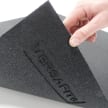
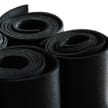
A suitable exercise surface with some cushioning may improve comfort, provided it remains stable and does not interfere with the rope.
Can You Skip Rope on a Gym Mat?
Some exercise mats can provide a comfortable training surface, but not every mat is suitable for skipping.
Soft, thick or unstable mats may make jumping less secure.
Look for a firm, non-slip surface that is appropriate for repeated foot contact.
Explore Fitness Mats and Accessories
6. How to Skip Rope with Good Technique
Good technique helps make skipping more efficient and controlled.
Keep Your Jumps Low
You only need enough clearance for the rope to pass beneath your feet.
Avoid unnecessarily high jumps, particularly when learning.
Keep Your Elbows Close to Your Body
Position your elbows comfortably near your sides and use controlled wrist movements to rotate the rope.
Avoid large arm circles.
Maintain a Relaxed Posture
Keep your shoulders relaxed and your body upright.
Look forward rather than constantly watching your feet.
Land with Control
Use small, comfortable jumps and avoid heavy landings.
If your feet, calves or joints become uncomfortable, reduce your workload or stop.
Build Coordination Before Speed
A consistent rhythm is more important than completing as many jumps as possible.
Practise at a manageable pace before attempting faster intervals or advanced techniques.
7. Skipping Rope vs Other Cardio Exercises
Skipping is one of several ways to improve cardiovascular fitness.
The best choice depends on your fitness level, comfort, available space and preferred workout style.
| Exercise | Main advantage | Considerations |
|---|---|---|
| Skipping rope | Portable, compact cardio training | Repeated jumping impact |
| Exercise bike | Seated, adjustable cardiovascular exercise | Requires floor space |
| Treadmill | Walking or running indoors | Larger equipment footprint |
| Rowing machine | Seated, whole-body movement | Technique and space requirements |
If repeated jumping is uncomfortable, an exercise bike or another lower-impact cardio option may be more appropriate.
For customers building a home gym, combining cardiovascular exercise with resistance training can support a more balanced programme.
8. Common Skipping Rope Mistakes
Beginners often experience difficulty because they try to progress too quickly.
Common mistakes include:
- Using a rope that's the wrong length
- Jumping too high
- Rotating the rope with large arm movements
- Starting with sessions that are too long
- Training on slippery or uneven surfaces
- Ignoring persistent discomfort
- Increasing intensity and frequency at the same time
Focus on learning the movement and developing a repeatable routine before increasing the challenge.
9. Building a Balanced Home Fitness Routine
Skipping rope can be a useful addition to a home gym, but it doesn't need to be your only form of exercise.
A balanced routine might combine:
- Skipping or another form of cardiovascular exercise
- Strength training using dumbbells, kettlebells or resistance machines
- Mobility and flexibility exercises
- Appropriate rest and recovery
If you're planning a home workout area, consider how your equipment will work together.
Explore Home Gym Planning Advice
Frequently Asked Questions About Skipping Rope
Does skipping rope help with weight loss?
Yes. Skipping rope can support weight loss by increasing physical activity and energy expenditure.
However, weight loss depends on overall energy balance, nutrition and consistency. Skipping alone does not guarantee a particular result.
How does skipping fit into a broader weight-loss plan?
Skipping can provide cardiovascular exercise alongside other activities such as walking, cycling and resistance training.
A sustainable plan should also consider eating habits, recovery and individual fitness levels.
The best approach is one you can maintain consistently.
How long and how often should a beginner skip?
Beginners can start with short intervals lasting approximately 20–30 seconds, followed by recovery periods.
Two or three manageable sessions per week may be a suitable starting point for some people.
Gradually increase the duration and frequency according to comfort and recovery.
What rope and surface should you use to get started?
Choose a rope that can be adjusted to your height and has comfortable, easy-to-control handles.
Use a flat, stable, non-slip surface with enough space around and above you.
Wear suitable training shoes and avoid uneven or slippery flooring.
How can you progress while reducing the risk of injury?
Increase workout duration and intensity gradually.
Keep jumps low, use controlled movements and allow recovery between demanding sessions.
Avoid increasing speed, session length and weekly frequency simultaneously.
Stop if you experience sharp or worsening pain, and seek appropriate professional advice if discomfort persists.
How can you make skipping a consistent habit?
Start with realistic goals and choose training times that fit your routine.
Keep your rope accessible, prepare a suitable exercise space and track your progress.
Short, regular sessions are often easier to sustain than occasional workouts that are excessively demanding.
Start Your Skipping Rope Fitness Journey with Fitness Network
Skipping rope is a simple and convenient way to introduce cardiovascular exercise into your routine.
Whether your goal is to improve fitness, increase daily activity or support weight management, the key is to start at a manageable level and build consistency.
Choose a suitable rope, train on a safe surface and increase the challenge gradually.
At Fitness Network, we offer skipping ropes and fitness accessories to help you create a practical home training setup.
Shop Skipping Ropes and Fitness Accessories at Fitness Network